ChipApex | Global Electronic Components Supplier
SEARCH
Search Product
Search Post
— IC芯片 | 连接器 | 传感器 | 被动器件 —
Search productSearch post
— IC芯片 | 连接器 | 传感器 | 被动器件 —
Consult the customer manager about the wholesale price.
consultation hotline:86-132-6715-2157
email:[email protected]
Contact the product manager for consultation. One-stop consultation is available.
Do you want a lower wholesale price? Please send us your inquiry and we will reply immediately.
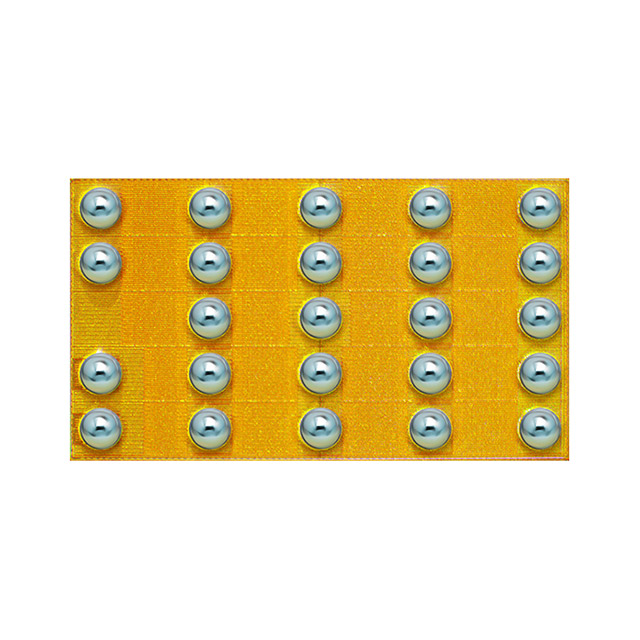
The EPC2030 is an enhancement mode Gallium Nitride (GaN) field-effect transistor manufactured by Efficient Power Conversion. It is supplied exclusively as a passivated die in a chip-scale package measuring 2.6 mm x 4.6 mm. Key electrical specifications include a drain-source voltage (VDS) of 40 V, a maximum on-resistance (RDS(on)) of 2.4 mΩ, and a continuous drain current (ID) of 31 A at 25°C. The device features a threshold voltage of 1.5 V, gate charge of 17 nC, and input capacitance of 1960 pF.
Verify the specific ordering suffix to confirm the exact passivation and solder ball configuration, as the component is supplied only in bare die form. Ensure compatibility with flip-chip or wire-bond assembly processes suitable for chip-scale GaN devices. Confirm that the source document explicitly identifies the manufacturer as EPC and matches the part number EPC2030 to avoid substitution errors with similar family members like EPC2031 or EPC2032.
Select this component when designing systems requiring a 40 V rating with minimal conduction losses below 2.4 mΩ. The low gate charge of 17 nC supports high-speed switching applications where driver power consumption is critical. Consider the physical dimensions of 2.6 mm x 4.6 mm for PCB layout constraints. This device is suitable for applications prioritizing efficiency and power density over discrete package availability.
The EPC2030 belongs to the eGaN FET product line from Efficient Power Conversion, which utilizes lateral GaN technology on silicon substrates. Unlike traditional vertical MOSFETs, these devices offer superior switching performance due to the absence of body diodes and reduced parasitic capacitances. The EPC2030 specifically targets the 40 V segment, providing a balance between voltage handling and ultra-low on-resistance for compact power solutions.
Publicly confirmed substitute part numbers include EPC2031 and EPC2032. Verify if alternative replacements require adjustments to gate drive voltages or thermal management strategies due to differences in RDS(on) or package characteristics.
 EPC2030
The activity of extra discounts on wholesale prices is in full swing…
Please fill in your contact information and we will send you the latest wholesale price list.