 ChipApex | Global Electronic Components Supplier

SEARCH
Search Product
Search Post
— IC芯片 | 连接器 | 传感器 | 被动器件 —
Search productSearch post
— IC芯片 | 连接器 | 传感器 | 被动器件 —
Consult the customer manager about the wholesale price.
consultation hotline:86-132-6715-2157
email:[email protected]
Contact the product manager for consultation. One-stop consultation is available.
Do you want a lower wholesale price? Please send us your inquiry and we will reply immediately.
The FDA802-VYT is a dual-bridge Class-D digital input automotive power amplifier manufactured by STMicroelectronics. It integrates a high-performance D/A converter and powerful MOSFET outputs to achieve superior efficiency compared to standard Class-AB amplifiers. The device supports a wide operating supply range from 5.5 V to 50 V, enabling operation under standard car batteries or boosted power supplies. Key electrical parameters include an integrated 110 dB D/A conversion with 110 dB dynamic range, I2S/TDM digital inputs supporting sampling frequencies up to 192 kHz, and full I2C bus driving capability. It is housed in an LQFP64 package with an exposed pad.
Verify the specific ordering suffix 'VYT' corresponds to the tape and reel packing format as defined in the device summary table. Confirm that the component meets AEC-Q100 (rev. G) qualification requirements for your automotive application. Ensure design compatibility with the LQFP64 package dimensions and thermal management needs associated with the exposed pad configuration.
Select this component for designs requiring a dual-bridge Class-D amplifier with integrated digital-to-analog conversion. It is suitable for applications needing high output power across varying supply voltages, from standard 14 V batteries up to 50 V boosted supplies. Consider its diagnostic features and EMI control capabilities if system reliability and electromagnetic compatibility are critical constraints.
The FDA802 belongs to a family of dual bridge Class-D amplifiers designed using advanced BCD technology. It is specifically intended for car radio applications where high efficiency and low distortion are required. The device combines powerful MOSFET outputs with integrated feedback loops containing output L-C low-pass filters to ensure frequency response linearity independent of external component quality.
The FDA802-VYY is a pin-compatible alternative offering the same functionality but packaged in trays instead of tape and reel. Verify that the change in packaging format aligns with your assembly line equipment and handling requirements before substituting.
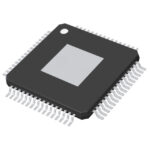 FDA802-VYT

The activity of extra discounts on wholesale prices is in full swing…
Please fill in your contact information and we will send you the latest wholesale price list.





