 ChipApex | Global Electronic Components Supplier
SEARCH
Search Product
Search Post
— IC芯片 | 连接器 | 传感器 | 被动器件 —
Search productSearch post
— IC芯片 | 连接器 | 传感器 | 被动器件 —
Consult the customer manager about the wholesale price.
consultation hotline:86-132-6715-2157
email:[email protected]
Contact the product manager for consultation. One-stop consultation is available.
Do you want a lower wholesale price? Please send us your inquiry and we will reply immediately.
The FGD3040G2 is an EcoSPARK® 2 ignition coil driver designed for advanced multi-spark, high-current ignition systems with lean burn requirements. It integrates a self-clamping inductive switching (SCIS) feature to manage energy dissipation during switching events. The device operates with a logic-level gate drive and meets AEC-Q101 automotive qualification standards. Key electrical parameters include a collector-emitter saturation voltage of 1.15 V and a continuous collector current capability of 25.6 A at 25°C. The SCIS energy rating is specified at 300 mJ at a junction temperature of 25°C. The component is housed in a DPAK surface-mount package.
Verify the specific revision status and manufacturing origin when sourcing this component, as Fairchild Semiconductor's automotive product lines have undergone corporate transitions. Confirm that the delivered parts match the original Fairchild specifications rather than generic equivalents, ensuring compliance with the required AEC-Q101 standards for your application.
Select the FGD3040G2 when designing ignition circuits that require reduced thermal management due to lower power dissipation. Compare its 300 mJ SCIS energy rating against system requirements. Ensure the DPAK package fits the PCB layout constraints. Verify compatibility with the driving logic voltage levels, as the device utilizes a logic-level gate drive architecture.
This part belongs to the EcoSPARK® 2 family of ignition coil drivers from Fairchild Semiconductor. It serves as a direct successor to previous generations, offering improved efficiency in a smaller footprint. The FGD3040G2 is often compared with the FGD3440G2, which offers higher SCIS energy capacity. Both are designed to replace older discrete solutions or earlier generation drivers in modern vehicle architectures.
The FGP3040G2-F085 is a related IGBT variant but differs in packaging (TO-220-3 vs DPAK) and configuration. Direct pin-to-pin replacement requires verifying the package type and thermal characteristics. No other identical substitutes are confirmed in public documentation.
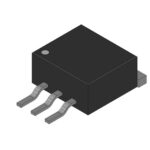 FGD3040G2
The activity of extra discounts on wholesale prices is in full swing…
Please fill in your contact information and we will send you the latest wholesale price list.





