 ChipApex | Global Electronic Components Supplier
SEARCH
Search Product
Search Post
— IC芯片 | 连接器 | 传感器 | 被动器件 —
Search productSearch post
— IC芯片 | 连接器 | 传感器 | 被动器件 —
Consult the customer manager about the wholesale price.
consultation hotline:86-132-6715-2157
email:[email protected]
Contact the product manager for consultation. One-stop consultation is available.
Do you want a lower wholesale price? Please send us your inquiry and we will reply immediately.
The FM-105-PIN is a plug-in frequency doubler manufactured by MACOM Technology Solutions. It operates within an output frequency range of 20 MHz to 1500 MHz. The device utilizes a balanced diode activation design to achieve excellent conversion loss and odd-order term suppression. It is designed for through-hole mounting, making it suitable for general-purpose RF applications requiring reliable frequency multiplication across a broad bandwidth.
Verify the specific datasheet version from MACOM Technology Solutions to confirm electrical characteristics and mechanical dimensions. Ensure compatibility with existing circuit board layouts for through-hole mounting. Cross-reference part numbers carefully as similar models exist from other manufacturers like TE Connectivity. Confirm that the pinout matches your design requirements before integration.
Select this component when a broadband frequency doubler is required for outputs up to 1.5 GHz. The balanced design offers superior harmonic suppression compared to single-ended alternatives. Consider the through-hole package constraints during PCB layout. Evaluate conversion loss specifications against system noise budget requirements. This model is appropriate for general-purpose RF applications rather than specialized high-power scenarios.
This component belongs to MACOM's family of plug-in frequency multipliers. It shares design principles with related models such as the FM-104 and FM-107, which cover different frequency ranges. The PIN suffix typically indicates a specific packaging or testing variant within the manufacturer's catalog. These devices are engineered for reliability in commercial and industrial RF environments.
The FM-107-PIN serves as a higher-frequency alternative with an output range extending to 4800 MHz. Direct substitution requires verifying frequency coverage needs and physical footprint compatibility. Other manufacturers offer similar doublers, but electrical parameters must be matched precisely. Consult official MACOM documentation for approved cross-references.
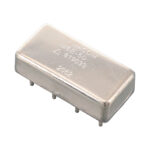 FM-105-PIN
The activity of extra discounts on wholesale prices is in full swing…
Please fill in your contact information and we will send you the latest wholesale price list.





