ChipApex | Global Electronic Components Supplier
SEARCH
Search Product
Search Post
— IC芯片 | 连接器 | 传感器 | 被动器件 —
Search productSearch post
— IC芯片 | 连接器 | 传感器 | 被动器件 —
Consult the customer manager about the wholesale price.
consultation hotline:86-132-6715-2157
email:[email protected]
Contact the product manager for consultation. One-stop consultation is available.
Do you want a lower wholesale price? Please send us your inquiry and we will reply immediately.
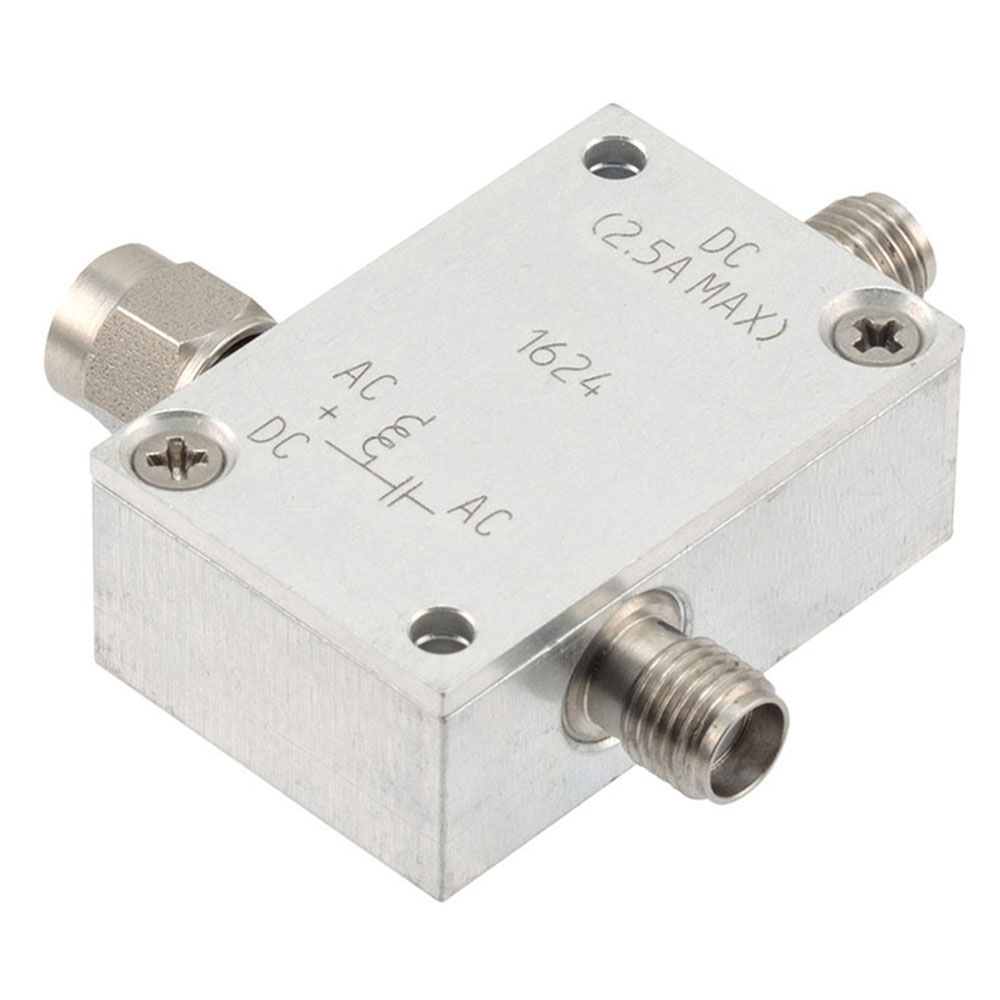
The FMBT1624 is a general-purpose RF bias tee module manufactured by Fairview Microwave. It operates within a frequency range of 10 MHz to 2.5 GHz and utilizes SMA connectors for interface compatibility. The component supports a maximum voltage of 100 V and a maximum current of 2.5 A, with a power rating of 5 W. Insertion loss specifications vary between 0.2 dB and 0.3 dB across the operational bandwidth. This device integrates DC injection capabilities into RF signal paths while maintaining signal integrity.
Verify that the required frequency range aligns with the 10 MHz to 2.5 GHz specification. Confirm that the DC voltage does not exceed 100 V and the current remains within the 2.5 A limit. Ensure the system power requirements do not surpass the 5 W rating. Check that SMA connector compatibility matches existing infrastructure. Validate insertion loss tolerance against system sensitivity requirements before finalizing procurement decisions.
Select this component when a compact solution is needed for injecting DC bias into RF circuits operating below 2.5 GHz. Consider the SMA interface for ease of connection in standard laboratory or field environments. Evaluate the insertion loss characteristics to ensure minimal signal degradation. Verify that the physical dimensions and mounting requirements fit within the available space constraints of the target assembly.
Fairview Microwave specializes in providing high-quality RF, microwave, and millimeter-wave components. The FMBT1624 belongs to their portfolio of bias tees designed for general-purpose applications. These modules facilitate the combination of DC power and RF signals in a single compact form factor. The product line emphasizes reliability and performance for various electronic testing and communication scenarios.
The FMBT1625 is a comparable bias tee from the same manufacturer offering similar frequency and electrical specifications. Verify connector type and pinout compatibility before substitution. Ensure that any alternative component meets the same voltage, current, and power ratings. Confirm that insertion loss values remain within acceptable limits for the specific application.
 FMBT1624
The activity of extra discounts on wholesale prices is in full swing…
Please fill in your contact information and we will send you the latest wholesale price list.