 ChipApex | Global Electronic Components Supplier
SEARCH
Search Product
Search Post
— IC芯片 | 连接器 | 传感器 | 被动器件 —
Search productSearch post
— IC芯片 | 连接器 | 传感器 | 被动器件 —
Consult the customer manager about the wholesale price.
consultation hotline:86-132-6715-2157
email:[email protected]
Contact the product manager for consultation. One-stop consultation is available.
Do you want a lower wholesale price? Please send us your inquiry and we will reply immediately.
The FORLINX-FET-G2LD-C+122GOE16M16GIB11 is an industrial-grade core board based on the Renesas RZ/G2L processor (R9A07G044Lxx). It features a dual-core Arm Cortex-A55 running at 1.2GHz and a single-core Arm Cortex-M33 operating at 200MHz. The system includes 2GB of DDR4 RAM and utilizes QSPI NorFlash for ROM alongside eMMC storage. Designed for harsh environments, all components support a wide operating temperature range from -40°C to +85°C. The board integrates a Mali-G31 GPU and hardware video processing capabilities, supporting Linux 4.19 and 5.10 operating systems.
Verify the specific storage configuration associated with the suffix 122GOE16M16GIB11 against official Forlinx Embedded documentation. Confirm that the included eMMC capacity matches project requirements. Ensure the Linux kernel version (4.19 or 5.10) aligns with software development timelines. Validate component availability for long-term production cycles given the industrial application context.
Select this module when high-performance computing is required alongside real-time MCU control via the integrated Cortex-M33. The RZ/G2L processor offers a balance of power efficiency and processing speed suitable for edge AI and multimedia tasks. Consider the extensive I/O options, such as multiple UARTs and CAN-FD channels, if interfacing with diverse industrial sensors and networks is necessary.
This core board is part of the FET series developed by Forlinx Embedded, leveraging the Renesas RZ/G2L SoC. The platform emphasizes long lifecycle support through CIP-maintained Linux kernels and a 10+ year processor lifespan guarantee. It serves as a foundational hardware platform for developing robust embedded solutions in sectors requiring reliability and extended product support.
Publicly confirmed substitute part numbers are not available in the provided data. Engineers should consult Renesas for direct silicon replacements or Forlinx for alternative core boards within their portfolio that utilize different processors but maintain similar form factors and interface layouts.
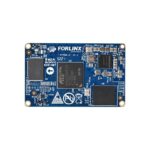 FORLINX-FET-G2LD-C+122GOE16M16GIB11
The activity of extra discounts on wholesale prices is in full swing…
Please fill in your contact information and we will send you the latest wholesale price list.






