ChipApex | Global Electronic Components Supplier

SEARCH
Search Product
Search Post
— IC芯片 | 连接器 | 传感器 | 被动器件 —
Search productSearch post
— IC芯片 | 连接器 | 传感器 | 被动器件 —
Consult the customer manager about the wholesale price.
consultation hotline:86-132-6715-2157
email:[email protected]
Contact the product manager for consultation. One-stop consultation is available.
Do you want a lower wholesale price? Please send us your inquiry and we will reply immediately.
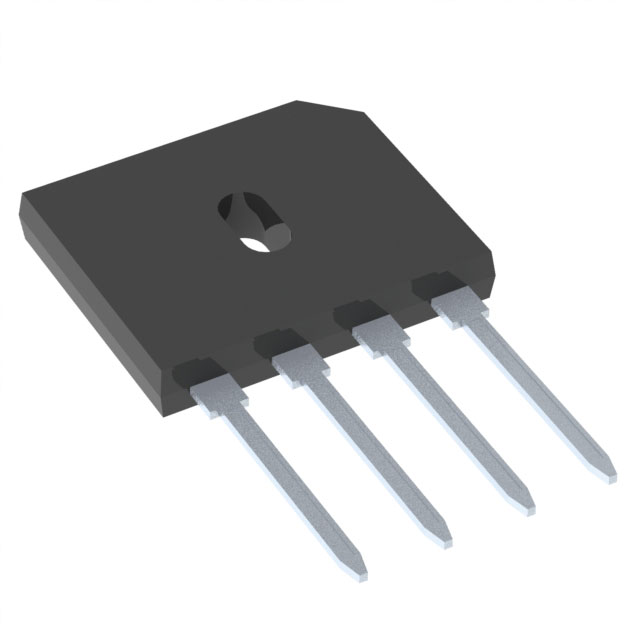
The GBU1006H is a single-phase bridge rectifier manufactured by Taiwan Semiconductor Corporation. It features an average forward current of 10 A and a maximum repetitive peak reverse voltage of 600 V. The device utilizes the GBU-4 through-hole package with solder pin termination. Key electrical parameters include a maximum forward voltage of 1.1 V at 10 A, a non-repetitive peak forward surge current of 220 A, and a maximum reverse leakage current of 5 µA at 1000 V. It operates within a temperature range of -55°C to +150°C junction temperature and holds AEC-Q101 automotive qualification.
Verify the specific suffix 'H' against the manufacturer's official datasheet to confirm it denotes the correct packaging or variant configuration. Ensure the component meets the required AEC-Q101 certification if used in automotive contexts. Cross-reference the part number with authorized distributors to confirm availability and authenticity before procurement.
Select this component when a 10 A current rating and 600 V reverse voltage are required in a GBU-4 through-hole package. Consider the 1.1 V forward voltage drop for efficiency calculations. Verify that the 220 A surge current capability matches the circuit's inrush requirements. Confirm compatibility with the target PCB footprint and thermal management strategy.
The GBU1006H belongs to the GBU series of single-phase bridge rectifiers from Taiwan Semiconductor. This series is designed for high-current applications using the standardized GBU-4 plastic encapsulated outline. The 'H' suffix typically indicates specific packaging or compliance attributes defined by the manufacturer, distinguishing it from standard variants within the same electrical family.
Direct substitutes must match the 10 A current, 600 V voltage, and GBU-4 package. Check equivalent parts from other manufacturers for identical AEC-Q101 qualification if automotive use is intended. Verify that alternative components share the same 1.1 V forward voltage and 220 A surge current ratings to ensure circuit compatibility.
 GBU1006H

The activity of extra discounts on wholesale prices is in full swing…
Please fill in your contact information and we will send you the latest wholesale price list.