ChipApex | Global Electronic Components Supplier

SEARCH
Search Product
Search Post
— IC芯片 | 连接器 | 传感器 | 被动器件 —
Search productSearch post
— IC芯片 | 连接器 | 传感器 | 被动器件 —
Consult the customer manager about the wholesale price.
consultation hotline:86-132-6715-2157
email:[email protected]
Contact the product manager for consultation. One-stop consultation is available.
Do you want a lower wholesale price? Please send us your inquiry and we will reply immediately.
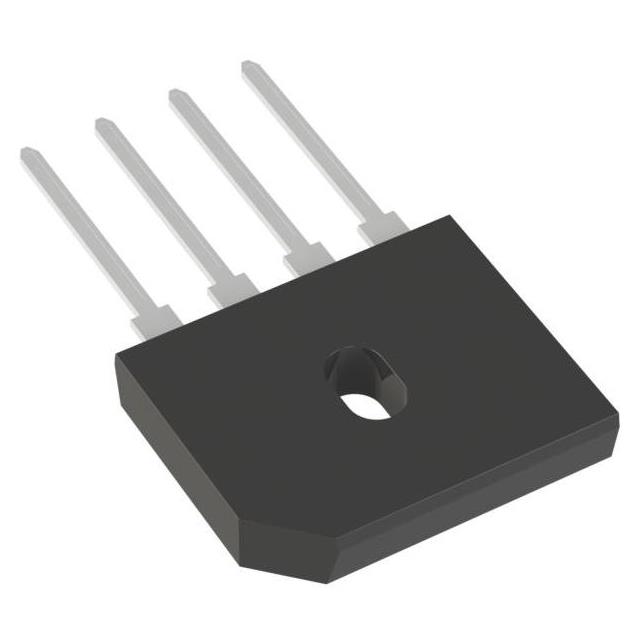
The GBU25005-G is a single-phase bridge rectifier manufactured by Comchip Technology, utilizing silicon General Purpose Planar (GPP) technology. It features a GBU-4 through-hole package with solder pin termination. The device supports an average forward current of 25 A and a peak repetitive reverse voltage of 50 V. Key electrical characteristics include a maximum forward voltage drop of 1 V at rated current and a surge current capability of 350 A. Reverse leakage current is specified at 10 uA. The component operates within a temperature range of -55°C to +150°C junction temperature.
Verify the specific manufacturer part number against official Comchip Technology documentation to ensure authenticity. Confirm that the ordering suffix matches the required packaging format, as variations may exist between tube and tray configurations. Cross-reference the RoHS compliance status with the latest datasheet revision to meet regulatory requirements for your specific region and application standards.
Select this component when a 25 A continuous current rating and 50 V blocking voltage are required in a compact through-hole footprint. Ensure the circuit design accounts for the 1 V forward voltage drop to manage thermal dissipation appropriately. Verify that the GBU-4 package dimensions fit the PCB layout constraints and that the operating temperature range aligns with the system's thermal environment.
This component belongs to the GBU25005 series of single-phase bridge rectifiers from Comchip Technology. It shares core electrical specifications with variants such as GBJ25005-G but differs in physical package style. The GBU series is designed for high-current applications requiring reliable planar passivation technology.
Direct substitutes include other GBU-4 packaged 25A 50V bridge rectifiers from manufacturers like Littelfuse or Vishay, provided pinout compatibility and thermal characteristics match. Verify that alternative parts maintain the same 1 V max forward voltage and 350 A surge rating to ensure circuit performance parity.
 GBU25005-G

The activity of extra discounts on wholesale prices is in full swing…
Please fill in your contact information and we will send you the latest wholesale price list.