ChipApex | Global Electronic Components Supplier

SEARCH
Search Product
Search Post
— IC芯片 | 连接器 | 传感器 | 被动器件 —
Search productSearch post
— IC芯片 | 连接器 | 传感器 | 被动器件 —
Consult the customer manager about the wholesale price.
consultation hotline:86-132-6715-2157
email:[email protected]
Contact the product manager for consultation. One-stop consultation is available.
Do you want a lower wholesale price? Please send us your inquiry and we will reply immediately.
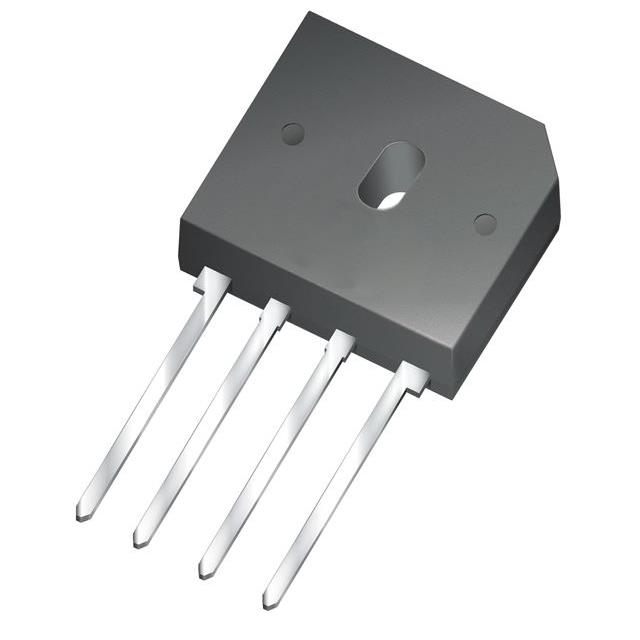
The GBU404H is a single-phase bridge rectifier diode manufactured by Taiwan Semiconductor Corporation. It features a 10 A average forward rectified current rating and a maximum repetitive peak reverse voltage of 400 V. The device utilizes standard silicon technology and is housed in a GBU (4-ESIP) through-hole package with four terminals. Key electrical specifications include a maximum non-repetitive peak surge forward current of 300 A at 60 Hz, a maximum DC blocking voltage of 400 V, and a maximum RMS voltage of 280 V. The component operates within a junction temperature range of -55 °C to +150 °C.
Verify the specific suffix 'H' against official datasheets to confirm automotive qualification status, as standard GBU404 variants may lack this designation. Ensure compliance with RoHS and REACH regulations required for your region. Confirm package dimensions match the 4-ESIP form factor during integration. Check for UL recognition file numbers if safety certification is mandatory for the end product.
Select the GBU404H when a 10 A current rating and 400 V reverse voltage are required in a through-hole configuration. The high surge rating makes it suitable for applications with significant inrush currents. Compare thermal resistance values against heat sink requirements if operating near the upper temperature limit. Verify that the 1.1 V forward voltage drop aligns with efficiency targets compared to Schottky alternatives.
This component belongs to the GBU series of single-phase bridge rectifiers from Taiwan Semiconductor. The series offers various current ratings from 1 A to 10 A and voltage ratings from 50 V to 1000 V. The GBU404H specifically represents the 10 A, 400 V variant within this lineup, designed for robust performance in industrial and consumer electronics applications.
Direct substitutes include other 10 A, 400 V bridge rectifiers in the GBU package such as the GBU1004 or GBU1004G. Verify pinout compatibility and thermal characteristics before substitution. Alternative packages like KBPC may require PCB redesign.
 GBU404H

The activity of extra discounts on wholesale prices is in full swing…
Please fill in your contact information and we will send you the latest wholesale price list.