ChipApex | Global Electronic Components Supplier

SEARCH
Search Product
Search Post
— IC芯片 | 连接器 | 传感器 | 被动器件 —
Search productSearch post
— IC芯片 | 连接器 | 传感器 | 被动器件 —
Consult the customer manager about the wholesale price.
consultation hotline:86-132-6715-2157
email:[email protected]
Contact the product manager for consultation. One-stop consultation is available.
Do you want a lower wholesale price? Please send us your inquiry and we will reply immediately.
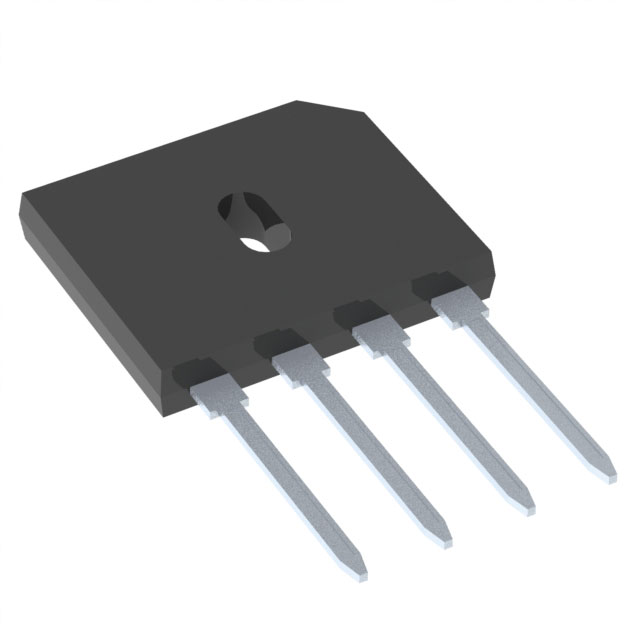
The GBU602H is a single-phase bridge rectifier from the GBU6 series by Taiwan Semiconductor, rated for a repetitive peak reverse voltage of 100 V and an average forward current of 6 A. It features a maximum surge forward current capability of 175 A and operates within a junction temperature range of -55°C to +150°C. The device utilizes a GBU-4 through-hole package with solder pin terminations. Electrical characteristics include a typical forward voltage of 1.1 V at 6 A and a maximum reverse leakage current of 5 µA at 25°C. This specific variant carries the 'H' suffix, indicating it is qualified under the AEC-Q101 automotive standard.
Verify the component authenticity against the official datasheet specifications before integration. Confirm that the ordering code matches the required voltage rating and AEC-Q101 qualification status. Ensure the procurement channel provides valid traceability documentation. Check for any recent product change notifications regarding manufacturing processes or material composition updates.
Select this component when a 100V reverse voltage rating is required for AC-to-DC conversion in compact designs. The GBU package allows for efficient PCB mounting with high surge current tolerance. Consider thermal resistance values for heat dissipation planning in enclosed environments. Verify that the operating temperature range meets the specific environmental constraints of the target application.
This part belongs to the GBU601–GBU607 series of standard bridge rectifiers manufactured by Taiwan Semiconductor. The series covers voltage ratings from 50V to 1000V while maintaining a consistent 6A current capacity and GBU package form factor. The GBU602H specifically denotes the 100V variant within this lineup, distinguished by its automotive-grade qualification indicated by the 'H' suffix.
Direct substitutes must match the 100V VRRM, 6A IF, and GBU-4 package dimensions. Verify equivalent AEC-Q101 qualification if automotive use is intended. Cross-reference thermal resistance and forward voltage characteristics to ensure circuit compatibility without redesign.
 GBU602H

The activity of extra discounts on wholesale prices is in full swing…
Please fill in your contact information and we will send you the latest wholesale price list.