ChipApex | Global Electronic Components Supplier

SEARCH
Search Product
Search Post
— IC芯片 | 连接器 | 传感器 | 被动器件 —
Search productSearch post
— IC芯片 | 连接器 | 传感器 | 被动器件 —
Consult the customer manager about the wholesale price.
consultation hotline:86-132-6715-2157
email:[email protected]
Contact the product manager for consultation. One-stop consultation is available.
Do you want a lower wholesale price? Please send us your inquiry and we will reply immediately.
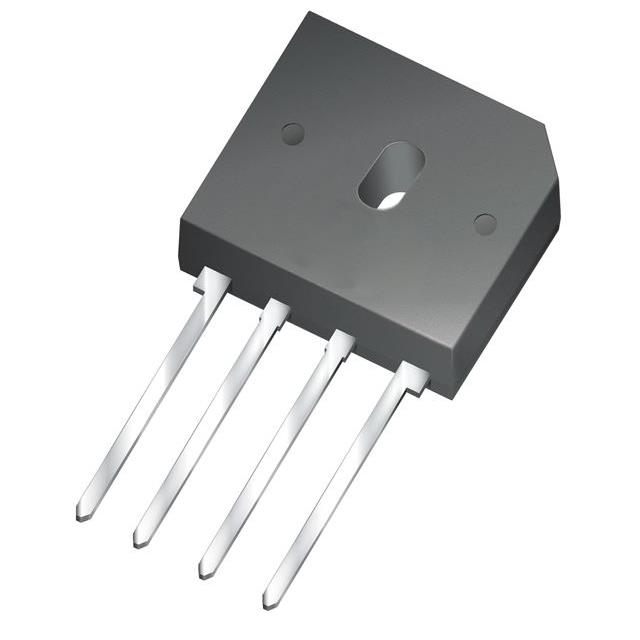
The GBU607H is a general-purpose bridge rectifier manufactured by Taiwan Semiconductor Corporation, designed for AC-to-DC conversion in power supply applications. This component features a high surge current capability and robust thermal performance suitable for industrial environments. Key electrical parameters include a maximum repetitive peak reverse voltage of 600V and an average forward rectified current of 6A at a case temperature of 130°C. The device utilizes a glass-passivated junction for enhanced stability and offers a low forward voltage drop to minimize conduction losses. It is housed in a compact DO-201AD (DO-204AC) axial leaded package, facilitating easy integration into through-hole PCB designs.
Verify the specific suffix code against the manufacturer's official datasheet to confirm exact electrical tolerances and packaging options. Ensure that the ordering information matches the required voltage and current ratings for your specific circuit design. Request the latest revision of the datasheet to confirm RoHS compliance status and any recent manufacturing changes before finalizing procurement orders.
Select this component when a reliable, cost-effective solution for medium-current rectification is required. Consider the thermal resistance characteristics and ensure adequate heatsinking or airflow if operating near maximum current limits. Verify that the peak inverse voltage rating exceeds the maximum reverse voltage expected in the application circuit to prevent breakdown.
This part belongs to the GBU series of bridge rectifiers from Taiwan Semiconductor, known for their durability and consistent performance in consumer and industrial electronics. The series offers various voltage and current combinations to suit different power requirements while maintaining a standardized footprint for easy replacement and design flexibility across multiple product lines.
Direct replacements must match the 6A current rating and 600V reverse voltage specifications. Check pinout compatibility and physical dimensions to ensure fit within existing PCB layouts. Verify that alternative brands offer similar surge current capabilities and thermal performance metrics.
 GBU607H

The activity of extra discounts on wholesale prices is in full swing…
Please fill in your contact information and we will send you the latest wholesale price list.