 ChipApex | Global Electronic Components Supplier
SEARCH
Search Product
Search Post
— IC芯片 | 连接器 | 传感器 | 被动器件 —
Search productSearch post
— IC芯片 | 连接器 | 传感器 | 被动器件 —
Consult the customer manager about the wholesale price.
consultation hotline:86-132-6715-2157
email:[email protected]
Contact the product manager for consultation. One-stop consultation is available.
Do you want a lower wholesale price? Please send us your inquiry and we will reply immediately.
The HA5023IBZ96 is a dual-channel video amplifier manufactured by Renesas Electronics Corporation. It utilizes current feedback technology and bipolar process construction. The device features a gain-bandwidth product of 125 MHz and a 3dB bandwidth of 125 MHz. It offers a slew rate of 475 V/us, input bias current of 15 uA, and input offset voltage of 3 mV. Electrical specifications include a common-mode rejection ratio of 53 dB, power supply rejection ratio of 60 dB, and voltage gain of 70 dB. Input voltage noise density is 4.5 nV/sqrt Hz. Operating temperature range spans from -40 C to +85 C. The component is housed in an SOIC-8 surface mount package.
Verify the specific suffix IBZ96 against official Renesas documentation to confirm package type and tape-and-reel specifications. Ensure compatibility with SOIC-8 footprint requirements during PCB layout. Confirm RoHS compliance status through the manufacturer's latest environmental declaration. Validate that the industrial temperature range meets system operational constraints before finalizing procurement orders.
Select this component when high slew rate and wide bandwidth are required for video or fast transient signals. The dual-channel design reduces board space compared to single-channel alternatives. Consider the bipolar technology characteristics for drive capability needs. Verify that the SOIC-8 package aligns with automated assembly capabilities and thermal management strategies for the target application environment.
This part belongs to the HA5023 series of video amplifiers produced by Renesas Electronics. The series includes variants with different packaging options such as PDIP for through-hole mounting. The HA5023IBZ96 specifically denotes the surface-mount variant intended for high-volume manufacturing processes. It represents a specialized analog solution within the broader Renesas portfolio of mixed-signal integrated circuits.
The HA5023IPZ is a pin-compatible alternative offering identical electrical performance but utilizing a PDIP-8 through-hole package instead of the SOIC-8 surface mount format.
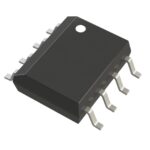 HA5023IBZ96
The activity of extra discounts on wholesale prices is in full swing…
Please fill in your contact information and we will send you the latest wholesale price list.





