 ChipApex | Global Electronic Components Supplier

SEARCH
Search Product
Search Post
— IC芯片 | 连接器 | 传感器 | 被动器件 —
Search productSearch post
— IC芯片 | 连接器 | 传感器 | 被动器件 —
Consult the customer manager about the wholesale price.
consultation hotline:86-132-6715-2157
email:[email protected]
Contact the product manager for consultation. One-stop consultation is available.
Do you want a lower wholesale price? Please send us your inquiry and we will reply immediately.
The HDBLS107G is a single-phase bridge rectifier from Taiwan Semiconductor, rated for a maximum repetitive peak reverse voltage of 1000V and an average forward rectified current of 1A. It features a high efficient recovery characteristic with a typical reverse recovery time of 50ns. The device is housed in a DBLS surface-mount package with four pins, measuring 8.51mm in length and 2.6mm in height. It supports a non-repetitive peak forward surge current of 30A and operates within a junction temperature range of -55°C to +150°C.
Verify the specific suffix designation against the manufacturer's latest datasheet to confirm pinout compatibility and electrical tolerances. Ensure that the procurement source provides original manufacturer documentation to validate AEC-Q101 qualification status if automotive application is required. Cross-reference the part number with official distributor catalogs to confirm current production status and lead times.
Select this component when a compact surface-mount bridge rectifier with fast recovery characteristics is needed for 1000V applications. Compare the 50ns reverse recovery time against standard rectifiers to determine suitability for high-frequency switching environments. Verify that the DBLS footprint matches the target PCB layout constraints and thermal management requirements.
This component belongs to the HDBLS series of high efficient recovery bridge rectifiers manufactured by Taiwan Semiconductor. The series utilizes glass passivation technology to enhance stability and reduce leakage currents compared to standard plastic-passivated alternatives. It is designed as a surface-mount solution for space-constrained electronic designs requiring reliable rectification at moderate current levels.
Direct substitutes include other 1A 1000V DBLS package bridge rectifiers from manufacturers such as Micro Commercial Components or LGE, provided they share identical pin configurations and similar reverse recovery specifications. Verify mechanical dimensions and thermal resistance values before substitution.
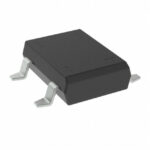 HDBLS107G

The activity of extra discounts on wholesale prices is in full swing…
Please fill in your contact information and we will send you the latest wholesale price list.






