 ChipApex | Global Electronic Components Supplier
SEARCH
Search Product
Search Post
— IC芯片 | 连接器 | 传感器 | 被动器件 —
Search productSearch post
— IC芯片 | 连接器 | 传感器 | 被动器件 —
Consult the customer manager about the wholesale price.
consultation hotline:86-132-6715-2157
email:[email protected]
Contact the product manager for consultation. One-stop consultation is available.
Do you want a lower wholesale price? Please send us your inquiry and we will reply immediately.
The HMC391LP4ETR is a surface-mount monolithic microwave integrated circuit (MMIC) voltage-controlled oscillator (VCO) manufactured by Analog Devices Inc. It operates within a frequency range of 3.9 GHz to 4.45 GHz and includes an integrated buffer amplifier. The device requires a supply voltage between 2.75 V and 3.25 V, drawing approximately 39 mA of current. It features a tuning voltage range from 0 VDC to 10 VDC with a typical push of 16 MHz/V. The output power is rated at 5 dBm, and it exhibits a phase noise of -106 dBc/Hz. Packaged in a QFN-24 footprint measuring 4.1 mm x 4.1 mm x 1 mm, it supports operation temperatures from -40°C to +85°C.
Verify the specific ordering suffix and package variant against the official Analog Devices datasheet to ensure compatibility with your design requirements. Confirm that the QFN-24 package dimensions and thermal pad specifications match your PCB layout constraints. Check for any recent product change notices or lifecycle status updates directly from the manufacturer before finalizing procurement plans.
Select this component when a fixed-frequency VCO with integrated buffering is required for the 3.9 to 4.45 GHz range. Ensure the control voltage supply can provide up to 10 VDC for full tuning range coverage. Verify that the 39 mA current draw fits within the system's power budget and that the 5 dBm output level meets the downstream stage input requirements without additional amplification.
This part belongs to the HMC391 series of voltage-controlled oscillators from Analog Devices. It is designed for applications demanding reliable microwave frequency synthesis in a small form factor. The inclusion of the buffer amplifier simplifies circuit design by reducing load-pull effects on the core oscillator.
Consult the official Analog Devices documentation for direct pin-compatible substitutes or updated revisions. Cross-reference with other HMC series VCOs if frequency ranges or packaging options differ from project requirements.
The device has a typical push value of 16 MHz/V, indicating its frequency variation relative to tuning voltage changes.
Yes, the component integrates a buffer amplifier to isolate the oscillator core from load variations.
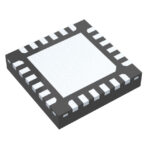 HMC391LP4ETR
The activity of extra discounts on wholesale prices is in full swing…
Please fill in your contact information and we will send you the latest wholesale price list.





