 ChipApex | Global Electronic Components Supplier
SEARCH
Search Product
Search Post
— IC芯片 | 连接器 | 传感器 | 被动器件 —
Search productSearch post
— IC芯片 | 连接器 | 传感器 | 被动器件 —
Consult the customer manager about the wholesale price.
consultation hotline:86-132-6715-2157
email:[email protected]
Contact the product manager for consultation. One-stop consultation is available.
Do you want a lower wholesale price? Please send us your inquiry and we will reply immediately.
The HMC434ETR is a low-noise, static divide-by-8 prescaler MMIC from Analog Devices Inc. It utilizes Indium Gallium Phosphide/Gallium Arsenide (InGaP) HBT technology for high performance. The device operates over a frequency range of DC to 8 GHz with a fixed division ratio of 8. It requires a supply voltage between 2.7 V and 3.3 V and draws an operating current of 62 mA at 3 V. The output power is -2 dBm. The component is housed in a surface-mount SOT-23-6 package and functions within a temperature range of -40°C to +85°C.
Verify the end-of-life status before procurement, as the manufacturer indicates the product is obsolete and will be discontinued. Confirm availability through authorized distributors or remaining stock channels. Ensure the specific ETR suffix matches the required tape-and-reel packaging configuration for automated assembly processes. Cross-reference the latest datasheet revision for any final manufacturing changes.
Select this component when a fixed divide-by-8 ratio is required for frequencies extending to 8 GHz. The InGaP HBT technology offers a balance of low noise and power consumption suitable for portable or battery-operated RF designs. Consider the SOT-23-6 footprint for space-constrained PCB layouts. Verify that the system power supply can maintain the 2.7 V to 3.3 V range to ensure stable operation across the specified temperature extremes.
The HMC434 is part of Analog Devices' HMC series of monolithic microwave integrated circuits. These components are designed for RF and microwave applications requiring reliable frequency division. The HBT process allows for high-speed operation with minimal power dissipation. This specific model serves as a prescaler stage in broader signal processing chains.
Public confirmed substitute part numbers are not available in the provided documentation. Due to the end-of-life status, direct replacements may require design modifications or alternative technologies. Consult Analog Devices technical support for potential next-generation alternatives.
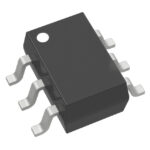 HMC434ETR
The activity of extra discounts on wholesale prices is in full swing…
Please fill in your contact information and we will send you the latest wholesale price list.





