 ChipApex | Global Electronic Components Supplier
SEARCH
Search Product
Search Post
— IC芯片 | 连接器 | 传感器 | 被动器件 —
Search productSearch post
— IC芯片 | 连接器 | 传感器 | 被动器件 —
Consult the customer manager about the wholesale price.
consultation hotline:86-132-6715-2157
email:[email protected]
Contact the product manager for consultation. One-stop consultation is available.
Do you want a lower wholesale price? Please send us your inquiry and we will reply immediately.
The HMC578LC3BTR-R5 is a GaAs MMIC frequency multiplier designed for surface-mount applications. It operates as an x2 active multiplier with an output frequency range of 24 GHz to 33 GHz. The device requires a supply voltage between 4.5 V and 5.5 V and draws approximately 82 mA of operating current. It is housed in a compact QFN-12 package measuring 3x3 mm, suitable for high-frequency RF systems requiring efficient frequency conversion.
Verify component authenticity through authorized Analog Devices distributors or certified partners. Confirm RoHS compliance status and moisture sensitivity level prior to assembly. Ensure storage conditions meet JESD22-A113 standards to prevent damage. Review the latest datasheet for handling precautions specific to GaAs MMICs. Validate that the QFN-12 footprint matches your PCB layout requirements before procurement.
Select this component when a fixed x2 multiplication ratio is required in the Ka-band spectrum. Compare against other HMC576 series variants if different frequency ranges are needed. Consider thermal management capabilities due to the low-power dissipation profile. Evaluate integration complexity relative to discrete multiplier solutions. Ensure system LO sources align with the input frequency requirements for optimal harmonic generation.
This part belongs to the HMC578G family of RF multipliers from Analog Devices. It shares architectural similarities with the HMC576 series but targets higher frequency outputs. The LC3B suffix indicates a specific lead frame and package configuration optimized for SMT processes. These components are commonly used in wireless infrastructure and satellite communications where size and linearity are critical.
HMC576LC3BTR-R5 serves as a functional substitute for lower frequency applications (18-29 GHz). Verify input frequency compatibility as the HMC578 is optimized for higher bands. Pinout configurations are generally compatible within the LC3B family, but electrical parameters differ significantly. Consult official substitution guides for detailed performance trade-offs.
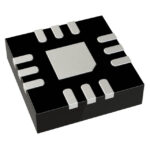 HMC578LC3BTR-R5
The activity of extra discounts on wholesale prices is in full swing…
Please fill in your contact information and we will send you the latest wholesale price list.





