 ChipApex | Global Electronic Components Supplier
SEARCH
Search Product
Search Post
— IC芯片 | 连接器 | 传感器 | 被动器件 —
Search productSearch post
— IC芯片 | 连接器 | 传感器 | 被动器件 —
Consult the customer manager about the wholesale price.
consultation hotline:86-132-6715-2157
email:[email protected]
Contact the product manager for consultation. One-stop consultation is available.
Do you want a lower wholesale price? Please send us your inquiry and we will reply immediately.
The HMC882ALP5E is a monolithic microwave integrated circuit (MMIC) low-pass filter manufactured by Analog Devices Inc. It features a user-selectable cutoff frequency adjustable from 3.95 GHz to 6.9 GHz via a single analog tuning voltage ranging from 0 V to 14 V applied to the VFCTL pin. The device provides a typical insertion loss of 3 dB and a return loss of 13 dB, with stopband attenuation exceeding 20 dB at 1.28 times the cutoff frequency. It operates within an ambient temperature range of -40°C to +85°C and is housed in a RoHS-compliant 32-lead, 5 mm × 5 mm LFCSP package.
Verify the specific ordering suffix against official documentation before procurement. The 'E' suffix indicates RoHS compliance, while the 'TR' suffix denotes tape and reel packaging. Confirm that the required operating temperature range aligns with the standard -40°C to +85°C specification provided in the datasheet. Ensure proper handling procedures are followed due to moisture sensitivity level 3 ratings.
Select the HMC882ALP5E when a dynamically adjustable cutoff frequency between 3.95 GHz and 6.9 GHz is required. Ensure the control voltage source can provide the necessary 0 V to 14 V range with minimal current draw. Consider the 32-lead LFCSP package dimensions for PCB layout constraints. Verify that the application requires the specified 50 Ω impedance matching on both RF input and output ports.
The HMC882A series serves as a compact alternative to physically large switched filter banks and cavity-tuned filters. Designed as a monolithic microwave integrated circuit, it offers excellent microphonics immunity due to its solid-state construction. The component integrates tuning functionality into a small footprint, facilitating advanced communications applications where size and weight are critical factors.
The HMC882ALP5ETR is the identical functional equivalent packaged in tape and reel format instead of cut tape. Both variants share the same electrical specifications, pinout, and thermal characteristics. Designers requiring automated surface-mount assembly should specify the TR suffix version while maintaining all other design parameters unchanged.
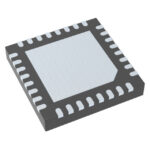 HMC882ALP5E
The activity of extra discounts on wholesale prices is in full swing…
Please fill in your contact information and we will send you the latest wholesale price list.





