 ChipApex | Global Electronic Components Supplier
SEARCH
Search Product
Search Post
— IC芯片 | 连接器 | 传感器 | 被动器件 —
Search productSearch post
— IC芯片 | 连接器 | 传感器 | 被动器件 —
Consult the customer manager about the wholesale price.
consultation hotline:86-132-6715-2157
email:[email protected]
Contact the product manager for consultation. One-stop consultation is available.
Do you want a lower wholesale price? Please send us your inquiry and we will reply immediately.
The HMC992LP5E is a general-purpose RF integrated circuit gain controller manufactured by Analog Devices Inc. It operates within a frequency range of 50 MHz to 800 MHz and is housed in a RoHS-compliant 32-lead QFN package measuring 5x5 mm. The device functions as an IF automatic gain controller, delivering a noise figure of 6 dB in its maximum gain state. It provides an output IP3 of up to +40 dBm. The component utilizes a control voltage (VCTRL) for gain adjustment, with performance characteristics such as input return loss varying based on the applied control voltage at specific frequencies like 300 MHz.
Verify current availability status as the product may be obsolete or discontinued. Confirm package integrity and pinout compatibility during integration. Ensure control voltage specifications align with system requirements. Check for alternative components if supply chain constraints exist. Validate datasheet revisions for any parameter updates prior to final design approval.
Select this component for applications requiring wideband gain control between 50 MHz and 800 MHz. Consider the 6 dB noise figure and +40 dBm output IP3 for linearity-sensitive designs. The 32-QFN package suits surface-mount assembly processes. Evaluate thermal management needs due to the compact 5x5 mm footprint. Ensure control interface voltages match the VCTRL requirements specified in the official documentation.
The HMC992LP5E belongs to the family of RF IC gain controllers from Analog Devices. It is designed for versatile RF applications requiring precise gain adjustment over a broad frequency spectrum. The component integrates automatic gain control capabilities to maintain signal integrity across varying input levels. Its construction supports high-performance communication systems needing reliable gain management.
The product is listed as obsolete and no longer manufactured. Verify available alternatives through official manufacturer channels. Cross-reference pinouts and electrical parameters for compatible substitutes. Ensure replacement components meet the same frequency and linearity requirements.
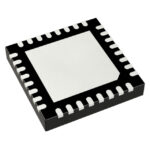 HMC992LP5E
The activity of extra discounts on wholesale prices is in full swing…
Please fill in your contact information and we will send you the latest wholesale price list.





