ChipApex | Global Electronic Components Supplier
SEARCH
Search Product
Search Post
— IC芯片 | 连接器 | 传感器 | 被动器件 —
Search productSearch post
— IC芯片 | 连接器 | 传感器 | 被动器件 —
Consult the customer manager about the wholesale price.
consultation hotline:86-132-6715-2157
email:[email protected]
Contact the product manager for consultation. One-stop consultation is available.
Do you want a lower wholesale price? Please send us your inquiry and we will reply immediately.
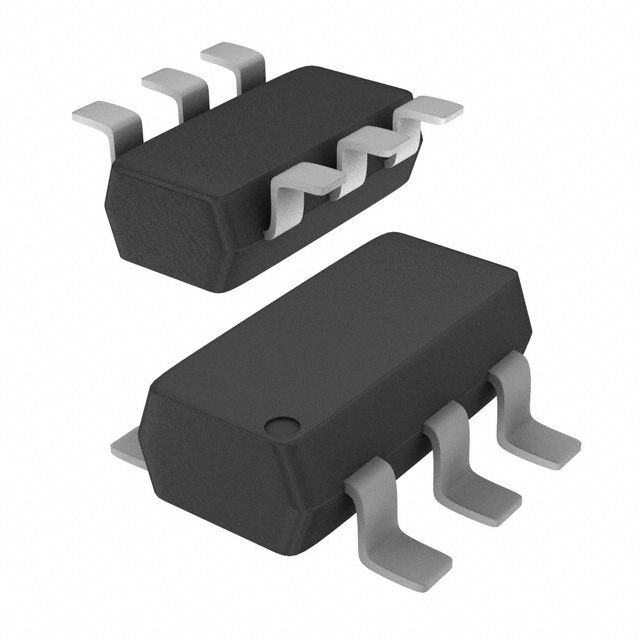
The HN1B04F(TE85L,F) is a dual NPN epitaxial planar silicon transistor manufactured by Toshiba Semiconductor and Storage. Designed for audio frequency general-purpose amplifier applications, it utilizes the PCT process technology to ensure high reliability and consistent performance. The component is housed in an SC-74 (SOT-457) surface-mount package, specifically identified as SM6, which facilitates automated assembly and compact circuit board layouts. It features a maximum collector-emitter voltage of 50V and a continuous collector current rating of 150mA. With a transition frequency of 80MHz and a power dissipation capacity of 300mW, this device is optimized for low-noise amplification tasks within consumer electronics and audio equipment.
Verify the specific ordering suffix TE85L,F against the manufacturer's latest datasheet to confirm packaging details such as reel size or tape specifications. Ensure that the SC-74 footprint matches your PCB design constraints. Cross-reference the RoHS compliance status with current environmental regulations before finalizing procurement orders.
Select this component when a dual NPN configuration is required for audio amplification within a limited board area. Compare the 80MHz transition frequency against higher-speed requirements if RF applications are involved. Evaluate the 300mW power dissipation limit relative to the thermal management capabilities of the target enclosure and PCB copper area.
This part belongs to Toshiba's HN1 series of small-signal transistors, which are widely used in analog signal processing. The TE85L,F suffix indicates a specific tape-and-reel packaging format intended for high-volume surface-mount manufacturing processes. It serves as a discrete alternative to integrated amplifier modules where discrete gain stages are preferred for flexibility.
Potential substitutes include other dual NPN transistors in SOT-457 packages with similar Vceo and Ic ratings. Verify pinout compatibility and thermal resistance values before substitution. Check for equivalent transition frequencies to maintain audio bandwidth performance.
 HN1B04F(TE85L,F)
The activity of extra discounts on wholesale prices is in full swing…
Please fill in your contact information and we will send you the latest wholesale price list.