 ChipApex | Global Electronic Components Supplier
SEARCH
Search Product
Search Post
— IC芯片 | 连接器 | 传感器 | 被动器件 —
Search productSearch post
— IC芯片 | 连接器 | 传感器 | 被动器件 —
Consult the customer manager about the wholesale price.
consultation hotline:86-132-6715-2157
email:[email protected]
Contact the product manager for consultation. One-stop consultation is available.
Do you want a lower wholesale price? Please send us your inquiry and we will reply immediately.
The ICS841S02BGI is a PLL-based clock generator designed for PCI Express applications. It generates a 100MHz differential HCSL clock from a 25MHz reference input, which can be derived from an external source or an on-chip crystal oscillator. The device features two current-mode differential HCSL output pairs with a maximum RMS period jitter of 3ps and output skew of 35ps. It supports spread spectrum clocking for EMI reduction via an I2C interface, selectable at -0.35% or -0.5%. Operating on a 3.3V supply (3.135V to 3.465V), it functions within a temperature range of -40°C to 85°C and is housed in a 20-lead TSSOP package.
Verify the manufacturer designation, as the datasheet identifies Integrated Device Technology (IDT) as the original producer. Confirm RoHS compliance status, as the document lists both standard (RoHS 5) and lead-free (RoHS 6) package options. Ensure the specific ordering suffix matches the required environmental rating and packaging type for procurement.
Select this component when a dedicated 100MHz HCSL clock source is required for PCIe interfaces. The device supports both crystal and external reference inputs, offering flexibility in system design. Consider the thermal impedance characteristics for PCB layout, particularly regarding air flow conditions, to ensure reliable operation within the specified industrial temperature range.
This part belongs to the HiPerClockS family of clock synthesizers. It was originally manufactured by Integrated Device Technology (IDT), which was later acquired by Renesas Electronics Corporation. The 'BGI' suffix indicates a specific package and temperature grade variant within the ICS841S02I product line.
Direct replacements include other variants within the ICS841S02I series, such as ICS841S02IGILF for lead-free requirements. Verify pin compatibility and electrical specifications before substituting with other clock generators from IDT/Renesas or competing manufacturers.
The maximum RMS period jitter is 3ps.
Spread spectrum operation is enabled and configured via an I2C bus interface, allowing selection between -0.35% and -0.5% down spread values.
Yes, the device accepts an external 25MHz reference applied to the XTAL_IN pin, with the XTAL_OUT pin left floating.
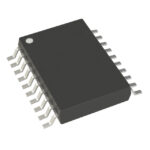 ICS841S02BGILF
The activity of extra discounts on wholesale prices is in full swing…
Please fill in your contact information and we will send you the latest wholesale price list.







