 ChipApex | Global Electronic Components Supplier
SEARCH
Search Product
Search Post
— IC芯片 | 连接器 | 传感器 | 被动器件 —
Search productSearch post
— IC芯片 | 连接器 | 传感器 | 被动器件 —
Consult the customer manager about the wholesale price.
consultation hotline:86-132-6715-2157
email:[email protected]
Contact the product manager for consultation. One-stop consultation is available.
Do you want a lower wholesale price? Please send us your inquiry and we will reply immediately.
The IGTH20N40D is a single through-hole silicon Insulated Gate Bipolar Transistor (IGBT) manufactured by Harris Corporation. This component features a three-terminal configuration designed for high-voltage switching applications. It operates with a collector-emitter voltage rating of 400V and supports a continuous collector current of 20A at 25°C. The device utilizes standard gate drive requirements typical for N-channel IGBTs, facilitating integration into power conversion circuits. Its construction allows for robust performance in industrial environments, providing efficient control of electrical loads through gate signal modulation.
Verify the manufacturer origin carefully, as Harris Corporation's semiconductor assets were acquired by International Rectifier, which was subsequently acquired by Infineon Technologies. Ensure the specific part number matches the original Harris datasheet specifications rather than generic equivalents. Confirm package integrity and pinout alignment before integration to avoid compatibility issues with existing board layouts.
Select this component when a 400V rated IGBT with 20A continuous current capacity is required for through-hole assembly. Consider the thermal management needs associated with its power dissipation characteristics. Verify that the gate drive voltage levels are compatible with the control logic used in the target application to ensure reliable switching performance.
Harris Semiconductor was a notable producer of discrete power devices before its acquisition. The IGTH20N40D belongs to the family of single IGBT transistors offered during that era. These components were widely used in mid-power applications requiring reliable high-voltage switching. The part represents a specific generation of silicon-based power semiconductors prior to industry consolidation.
Check for direct replacements from Infineon or other manufacturers offering equivalent 400V/20A through-hole IGBTs. Ensure pin compatibility and thermal resistance values match the original design constraints. Verify that any substitute maintains the same switching speed and saturation voltage characteristics to preserve circuit performance.
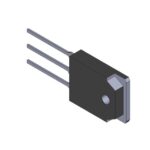 IGTH20N40D
The activity of extra discounts on wholesale prices is in full swing…
Please fill in your contact information and we will send you the latest wholesale price list.





