ChipApex | Global Electronic Components Supplier
SEARCH
Search Product
Search Post
— IC芯片 | 连接器 | 传感器 | 被动器件 —
Search productSearch post
— IC芯片 | 连接器 | 传感器 | 被动器件 —
Consult the customer manager about the wholesale price.
consultation hotline:86-132-6715-2157
email:[email protected]
Contact the product manager for consultation. One-stop consultation is available.
Do you want a lower wholesale price? Please send us your inquiry and we will reply immediately.
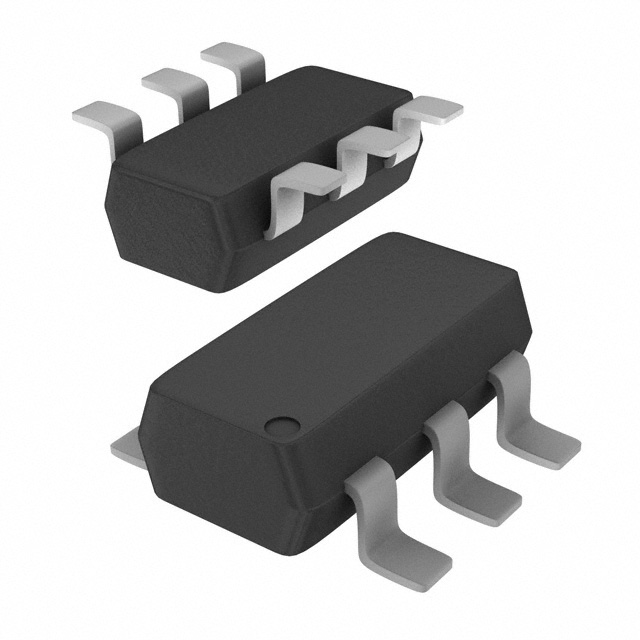
The IMX1T108 is a dual NPN bipolar junction transistor (BJT) array manufactured by Rohm Semiconductor. It integrates two independent 2SC2412K transistor elements within a single SMT6 surface-mount package, which corresponds to the SC-74 or SOT-457 form factor. The device supports a maximum collector-emitter voltage of 50V and a continuous collector current of 150mA. Key electrical specifications include a DC current gain (hFE) ranging from 120 to 560 at 1mA and 6V, with a transition frequency of 180MHz. The component is rated for a maximum power dissipation of 300mW and operates at junction temperatures up to 150°C.
Verify the specific suffix T108 against official Rohm documentation to confirm reel packaging details. Confirm RoHS compliance status through the manufacturer's latest datasheet. Check for end-of-life notifications, as similar models in this series may carry NRND status. Ensure the ordering part number matches the exact pinout and electrical tolerances required for the design.
Select the IMX1T108 when a design requires two independent NPN transistors in a minimal footprint. Compare hFE ranges and transition frequencies against circuit requirements to ensure adequate gain and bandwidth. Verify that the 300mW power dissipation rating suits the thermal management strategy. Consider compatibility with existing automated pick-and-place equipment if high-volume production is planned.
The IMX1T108 belongs to Rohm's IMX series of general-purpose dual transistors. This series is designed to replace discrete dual-transistor setups by integrating two chips into a single package. The T108 suffix typically denotes the specific tape-and-reel packaging configuration used for automated surface-mount assembly processes.
Publicly confirmed direct substitutes are not available in the provided data. Designers should consult Rohm's official replacement guides or contact technical support for qualified alternatives. Verify pin compatibility and electrical parameters before considering any cross-reference components.
 IMX1T108
The activity of extra discounts on wholesale prices is in full swing…
Please fill in your contact information and we will send you the latest wholesale price list.