ChipApex | Global Electronic Components Supplier

SEARCH
Search Product
Search Post
— IC芯片 | 连接器 | 传感器 | 被动器件 —
Search productSearch post
— IC芯片 | 连接器 | 传感器 | 被动器件 —
Consult the customer manager about the wholesale price.
consultation hotline:86-132-6715-2157
email:[email protected]
Contact the product manager for consultation. One-stop consultation is available.
Do you want a lower wholesale price? Please send us your inquiry and we will reply immediately.
The INA101HP is a high-accuracy, wide-bandwidth programmable gain instrumentation amplifier manufactured by Texas Instruments. It features a fixed gain of 1 V/V to 1000 V/V with a gain error of 0.002%. The device offers a 3dB bandwidth of 25 kHz and a full power bandwidth of 300 kHz. Key electrical specifications include an input offset voltage of 250 µV, input bias current of 30 nA, and a common-mode rejection ratio (CMRR) of 106 dB. It operates on dual supply voltages ranging from ±10 V to ±40 V, with a maximum supply voltage of 40 V. The quiescent current is 6.7 mA. The component is housed in a 14-PDIP package and supports an operating temperature range from -55°C to +125°C.
Verify the specific suffix 'HP' indicates the correct package type and temperature grade. Confirm RoHS compliance status as per the latest manufacturer documentation. Ensure the ordering part number matches the required gain setting and pinout configuration for your PCB layout. Check for any non-cancelable/non-returnable restrictions if applicable to the distributor.
Select this component when high accuracy and wide bandwidth are critical for differential signal conditioning. The fixed gain architecture simplifies design compared to adjustable gain amplifiers. Consider the 14-PDIP package constraints for board space. Evaluate the 6.7 mA supply current against power budget requirements. Verify that the 250 µV offset voltage meets the precision needs of the application.
The INA101HP belongs to the INA101 series of programmable gain instrumentation amplifiers from Texas Instruments. This series is designed for applications requiring high accuracy and ease of use. The HP variant specifically denotes the plastic DIP package option. It serves as a complete solution for precision measurement tasks, integrating all necessary gain-setting resistors internally to minimize external component count and potential errors.
Check for direct pin-compatible alternatives within the INA101 family or other TI instrumentation amplifiers with similar gain and bandwidth specs. Verify that substitute parts meet the same CMRR and offset voltage requirements. Ensure the replacement supports the required operating temperature range and supply voltage limits.
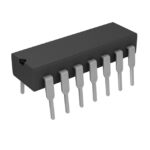 INA101HP

The activity of extra discounts on wholesale prices is in full swing…
Please fill in your contact information and we will send you the latest wholesale price list.