 ChipApex | Global Electronic Components Supplier
SEARCH
Search Product
Search Post
— IC芯片 | 连接器 | 传感器 | 被动器件 —
Search productSearch post
— IC芯片 | 连接器 | 传感器 | 被动器件 —
Consult the customer manager about the wholesale price.
consultation hotline:86-132-6715-2157
email:[email protected]
Contact the product manager for consultation. One-stop consultation is available.
Do you want a lower wholesale price? Please send us your inquiry and we will reply immediately.
The TP2261-TR is a single-channel operational amplifier from the TP226x series, manufactured by 3PEAK. It operates on a supply voltage range of 3 V to 36 V with a maximum quiescent current of 1000 μA per channel. Key electrical parameters include a gain-bandwidth product of 3.5 MHz, a slew rate of 15 V/μs, and an overload recovery time of 100 ns. The device features rail-to-rail output capability and input common-mode voltage extending to the negative supply rail. Input offset voltage is specified at ±2 mV (max) at 25°C, with a typical drift of 2 μV/°C across the operating temperature range of −40°C to 125°C.
Verify the specific package type associated with the -TR suffix against the manufacturer's official order information table. Confirm that the required tape and reel dimensions match the design constraints. Ensure the component meets the necessary ESD protection levels for the intended manufacturing environment. Cross-reference the thermal resistance values with the selected package outline to validate heat dissipation requirements.
Select this component when high supply voltage operation up to 36 V is required alongside low power consumption. The rail-to-rail output and extended input range make it suitable for single-supply designs. Consider the 3.5-MHz bandwidth and fast response times for applications requiring quick signal processing. Verify that the package options support the desired PCB layout and thermal management strategy.
The TP2261-TR belongs to the TP226x family of operational amplifiers, which includes dual (TP2262) and quad (TP2264) variants. This series is designed as a plug-in replacement for commercially available op amps to improve performance and reduce power consumption. The TP2261 specifically denotes the single-channel version within this lineup.
The datasheet states the series can replace commercially available op amps but does not list specific substitute part numbers. Verify pin compatibility and electrical specifications against existing designs before substitution.
Yes, the differential input voltage range extends to the supply rail, allowing the device to function as a comparator in addition to its primary role as an operational amplifier.
The input common-mode voltage range extends from the negative supply rail (−VS) to approximately 1.5 V below the positive supply rail (+VS).
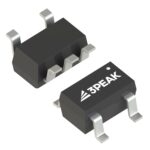 TP2261-TR
The activity of extra discounts on wholesale prices is in full swing…
Please fill in your contact information and we will send you the latest wholesale price list.






