ChipApex | Global Electronic Components Supplier

SEARCH
Search Product
Search Post
— IC芯片 | 连接器 | 传感器 | 被动器件 —
Search productSearch post
— IC芯片 | 连接器 | 传感器 | 被动器件 —
Consult the customer manager about the wholesale price.
consultation hotline:86-132-6715-2157
email:[email protected]
Contact the product manager for consultation. One-stop consultation is available.
Do you want a lower wholesale price? Please send us your inquiry and we will reply immediately.
The INA105KU is a precision unity-gain differential amplifier manufactured by Texas Instruments. It integrates laser-trimmed thin-film resistors to achieve high accuracy without external components. The device operates on a single supply voltage ranging from 10 V to 36 V, with a typical supply current of 1.5 mA. It features a bandwidth of 1 MHz and a slew rate of 3 V/µs. The input offset voltage is typically 50 µV, ensuring minimal error in signal conditioning applications. Packaged in an 8-SOIC case, it supports operation from -40°C to +85°C.
Verify the specific suffix KU against the official Texas Instruments datasheet to confirm package type and temperature range. Ensure compatibility with system voltage requirements before integration. Check for recent product change notifications regarding manufacturing site or material composition updates.
Select this component when a fixed unity-gain differential configuration is required. Compare performance metrics such as CMRR and offset voltage against other precision amplifiers if variable gain is needed. Consider thermal management within the specified operating temperature range during PCB layout.
This part belongs to the INA10x series of precision instrumentation amplifiers designed for high-accuracy applications. The series offers various gain options integrated into the package. The INA105 specifically provides a fixed gain of one, making it ideal for buffering differential signals while maintaining high common-mode rejection capabilities.
Official substitutes include parts from the same family with different gain settings if circuit topology allows modification. Verify pinout compatibility and electrical specifications before replacing. Consult the manufacturer's guide for recommended alternatives if the INA105KU is discontinued.
The common-mode voltage range extends from the negative supply rail to the positive supply rail, allowing full-scale differential input handling.
No, the INA105KU has a fixed unity gain determined by the internal laser-trimmed resistor network.
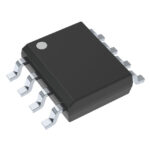 INA105KU

The activity of extra discounts on wholesale prices is in full swing…
Please fill in your contact information and we will send you the latest wholesale price list.