ChipApex | Global Electronic Components Supplier

SEARCH
Search Product
Search Post
— IC芯片 | 连接器 | 传感器 | 被动器件 —
Search productSearch post
— IC芯片 | 连接器 | 传感器 | 被动器件 —
Consult the customer manager about the wholesale price.
consultation hotline:86-132-6715-2157
email:[email protected]
Contact the product manager for consultation. One-stop consultation is available.
Do you want a lower wholesale price? Please send us your inquiry and we will reply immediately.
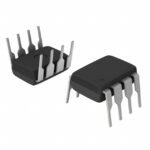
The INA111AP is a high-speed FET-input instrumentation amplifier from Texas Instruments, housed in an 8-pin PDIP package. It utilizes a current-feedback architecture to deliver extended bandwidth and rapid settling times. Key electrical parameters include a maximum input bias voltage of ±1000µV, a typical gain-bandwidth product of 2MHz at unity gain, and a maximum input bias current of 20pA. The device supports dual power supplies with a typical rating of ±15V and offers laser-trimmed offset voltage and drift for high DC precision.
Verify the specific suffix 'AP' corresponds to the standard commercial temperature range and PDIP-8 package configuration as documented in the official datasheet. Confirm that the component meets RoHS compliance standards regarding antimony and bromine content. Ensure the ordering part number matches the exact pinout and electrical specifications required for the target application circuit design.
Select this component when high input impedance and low bias current are critical requirements. The FET input stage makes it suitable for interfacing with high-impedance sources without significant signal degradation. Consider the current-feedback topology if wide bandwidth and fast settling are prioritized over ultra-low noise performance compared to traditional voltage-feedback instrumentation amplifiers.
The INA111 series represents a family of instrumentation amplifiers designed for applications requiring high speed and precision. The INA111AP specifically denotes the through-hole PDIP variant within this lineup. It shares core architectural features with other members of the series but is distinguished by its physical packaging and specific manufacturing lot characteristics defined by the manufacturer's quality standards.
Direct replacements must match the 8-pin PDIP footprint and FET-input architecture. Verify that substitute components offer comparable input bias current levels below 20pA and similar gain-bandwidth products to maintain circuit stability and signal integrity in existing designs.
 INA111AP

The activity of extra discounts on wholesale prices is in full swing…
Please fill in your contact information and we will send you the latest wholesale price list.