ChipApex | Global Electronic Components Supplier

SEARCH
Search Product
Search Post
— IC芯片 | 连接器 | 传感器 | 被动器件 —
Search productSearch post
— IC芯片 | 连接器 | 传感器 | 被动器件 —
Consult the customer manager about the wholesale price.
consultation hotline:86-132-6715-2157
email:[email protected]
Contact the product manager for consultation. One-stop consultation is available.
Do you want a lower wholesale price? Please send us your inquiry and we will reply immediately.
The INA114BPG4 is a precision instrumentation amplifier manufactured by Texas Instruments. It features a single-channel architecture housed in an 8-pin DIP package. The device operates within a supply voltage range of 2.25V to 18V and supports a maximum supply voltage of up to 30V or 50V depending on specific conditions. Key electrical characteristics include a gain bandwidth product of 1 MHz, a slew rate of 60 mV/µs, and a common-mode rejection ratio (CMRR) of 110 dB. Input offset voltage is specified at 125 µV with an input bias current of 500 pA. The unit draws a supply current of 2.2 mA and functions reliably across a temperature range of -40°C to 125°C.
Verify the component authenticity through authorized distributors or direct manufacturer channels. Confirm the presence of the G4 suffix indicating lead-free compliance and RoHS standards. Ensure the package type matches the required PCB footprint. Check for moisture sensitivity levels if storage conditions are critical. Validate the operating temperature range against your specific environmental requirements before finalizing procurement.
Select this component when high CMRR and low drift are critical for maintaining signal integrity. Consider the 1 MHz bandwidth for applications requiring moderate speed. Evaluate the 8-pin DIP package constraints against available board space. Compare input bias current specifications against other options if dealing with high-impedance sources. Ensure the supply voltage range aligns with the available power rails in the design.
This part belongs to the INA114 series of precision instrumentation amplifiers from Texas Instruments. It is designed as a drop-in replacement for older Burr-Brown models. The series is known for its stability and accuracy in demanding analog signal processing tasks. It serves as a fundamental building block for converting small differential signals into usable single-ended outputs.
The INA114BU is a documented equivalent model within the same family. Verify pin compatibility and electrical parameter overlaps before substitution. Ensure that any alternative maintains the required CMRR and bandwidth specifications for the application.
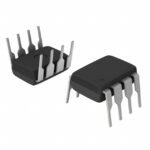 INA114BPG4

The activity of extra discounts on wholesale prices is in full swing…
Please fill in your contact information and we will send you the latest wholesale price list.