ChipApex | Global Electronic Components Supplier

SEARCH
Search Product
Search Post
— IC芯片 | 连接器 | 传感器 | 被动器件 —
Search productSearch post
— IC芯片 | 连接器 | 传感器 | 被动器件 —
Consult the customer manager about the wholesale price.
consultation hotline:86-132-6715-2157
email:[email protected]
Contact the product manager for consultation. One-stop consultation is available.
Do you want a lower wholesale price? Please send us your inquiry and we will reply immediately.
The INA115BUG4 is a precision instrumentation amplifier from Texas Instruments, housed in a 16-pin SOIC package. It features a gain bandwidth product of 1 MHz and a 3 dB bandwidth of 10 kHz. Key electrical specifications include a common-mode rejection ratio (CMRR) of 110 dB to 120 dB, an input bias current of 2 nA, and an input offset voltage of 50 µV. The device operates on dual supplies ranging from ±4.5 V to ±18 V (9 V to 36 V total), with a maximum supply voltage of 36 V. It consumes 2.2 mA of operating current and supports gains from 1 V/V to 10,000 V/V.
Verify the specific suffix 'G4' against the manufacturer's current production status, as this variant may be obsolete. Confirm that the SOIC-16 package matches the target PCB footprint. Ensure the required CMRR and bandwidth specifications align with the application needs, noting potential variations between INA115BU and INA115BUG4 datasheets. Check for moisture sensitivity level requirements if reflow soldering is planned.
Select the INA115BUG4 when a general-purpose instrumentation amplifier with low cost and high accuracy is required. It is suitable for applications needing a gain range up to 10,000 V/V with minimal external components. Consider the 1 MHz gain bandwidth product for moderate-speed signals. Compare against the standard INA115BU if lead time or availability is critical, as the G4 variant may have different lifecycle statuses.
The INA115 series belongs to Texas Instruments' family of low-cost, general-purpose instrumentation amplifiers. These devices utilize a three-op amp design to achieve excellent accuracy and high common-mode rejection. The series is designed for versatile use in various analog signal conditioning tasks, offering a balance of performance and ease of implementation in compact packages like the SOIC-16.
The INA115BU is the primary functional equivalent within the same series. Verify pinout compatibility and electrical parameter overlaps before substitution. Note that the INA115BUG4 is listed as obsolete by some distributors; check current manufacturing status.
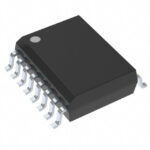 INA115BUG4

The activity of extra discounts on wholesale prices is in full swing…
Please fill in your contact information and we will send you the latest wholesale price list.