ChipApex | Global Electronic Components Supplier

SEARCH
Search Product
Search Post
— IC芯片 | 连接器 | 传感器 | 被动器件 —
Search productSearch post
— IC芯片 | 连接器 | 传感器 | 被动器件 —
Consult the customer manager about the wholesale price.
consultation hotline:86-132-6715-2157
email:[email protected]
Contact the product manager for consultation. One-stop consultation is available.
Do you want a lower wholesale price? Please send us your inquiry and we will reply immediately.
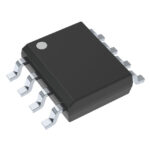
The INA118UB/2K5G4 is a precision, low-power instrumentation amplifier manufactured by Texas Instruments. It features a single channel with a common-mode rejection ratio of 107 dB and an input bias current of 5 nA. The device operates on supply voltages ranging from 2.7 V to 36 V while consuming only 350 µA of quiescent current. Key electrical specifications include a 3-dB bandwidth of 800 kHz, a slew rate of 900 mV/µs, and an input offset voltage of 50 µV. It is housed in an 8-SOIC surface-mount package and functions within a temperature range of -40°C to +85°C.
Verify the specific suffix G4 indicates RoHS compliance status as per manufacturer documentation. Confirm the /2K5 designation corresponds to reel packaging quantities. Ensure the UB variant matches the required performance grade for your application. Cross-reference the datasheet revision date to confirm technical parameters have not changed. Validate that the SOIC-8 package dimensions align with your PCB footprint requirements.
Select this component when high accuracy and low power are critical constraints. The 800 kHz bandwidth supports moderate-speed applications requiring precise gain settings. Consider the 50 µV offset voltage for DC-coupled measurements where drift must be minimized. The wide supply voltage range allows compatibility with both single and dual supply architectures without level shifting.
This part belongs to the INA118 family of instrumentation amplifiers known for their unity-gain stability and external resistor gain setting. The UB sub-series typically denotes a specific performance bin or temperature grade within the standard INA118 line. It serves as a direct replacement for older Burr-Brown branded INA118 devices after Texas Instruments acquired the product line.
The gain is set externally using a single precision resistor connected between the RG pins, allowing for flexible gain adjustment from 1 V/V to infinity.
The device features a maximum input resistance of 10 GOhms, which minimizes loading effects on high-impedance signal sources.
 INA118UB/2K5G4

The activity of extra discounts on wholesale prices is in full swing…
Please fill in your contact information and we will send you the latest wholesale price list.