ChipApex | Global Electronic Components Supplier

SEARCH
Search Product
Search Post
— IC芯片 | 连接器 | 传感器 | 被动器件 —
Search productSearch post
— IC芯片 | 连接器 | 传感器 | 被动器件 —
Consult the customer manager about the wholesale price.
consultation hotline:86-132-6715-2157
email:[email protected]
Contact the product manager for consultation. One-stop consultation is available.
Do you want a lower wholesale price? Please send us your inquiry and we will reply immediately.
The INA126U/2K5 is a micropower instrumentation amplifier from Texas Instruments, housed in an 8-SOIC surface-mount package. It operates on a single supply voltage ranging from 2.7 V to 36 V and draws only 175 µA of quiescent current. The device features a differential input with high input impedance and provides a gain range adjustable from 5 V/V to 10,000 V/V via a single external resistor. Key electrical characteristics include a 200 kHz bandwidth, 400 mV/µs slew rate, and low offset voltage of 250 µV maximum.
Verify the specific suffix 'U/2K5' corresponds to the SOIC-8 package and tape-and-reel quantity when ordering. Confirm RoHS compliance status through the manufacturer's latest documentation. Ensure ESD handling precautions are followed during assembly due to the sensitivity of CMOS input stages. Cross-reference the distributor part number with the official Texas Instruments datasheet to confirm pinout and thermal specifications match your design requirements.
Select this component when low power consumption is critical alongside moderate precision requirements. The INA126 offers a balance between the higher performance of the INA128 and the lower cost of the INA125. Consider the 250 µV max offset voltage and 83 dB CMRR for applications requiring basic noise rejection. Verify that the required gain can be achieved with available standard resistor values within the specified range.
The INA126 belongs to Texas Instruments' family of micropower instrumentation amplifiers, designed for general-purpose analog signal conditioning. It shares architectural similarities with the INA125 and INA128 but optimizes for lower power usage. The U/2K5 designation indicates the industrial temperature grade variant packaged in reels for automated surface-mount assembly processes.
The gain is set by connecting a single external resistor between the Rg pins (pins 1 and 8). The gain formula is G = 1 + (50kΩ / Rg).
The input bias current is typically 25 nA, which contributes to minimal voltage drop across source impedances.
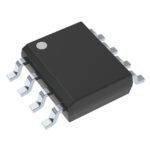 INA126U/2K5

The activity of extra discounts on wholesale prices is in full swing…
Please fill in your contact information and we will send you the latest wholesale price list.