ChipApex | Global Electronic Components Supplier

SEARCH
Search Product
Search Post
— IC芯片 | 连接器 | 传感器 | 被动器件 —
Search productSearch post
— IC芯片 | 连接器 | 传感器 | 被动器件 —
Consult the customer manager about the wholesale price.
consultation hotline:86-132-6715-2157
email:[email protected]
Contact the product manager for consultation. One-stop consultation is available.
Do you want a lower wholesale price? Please send us your inquiry and we will reply immediately.
The INA181A1QDBVRQ1 is a unidirectional current sense amplifier from Texas Instruments, certified to AEC-Q100 standards for automotive applications. It features a fixed gain of 20 V/V and supports a common-mode voltage range from -200 mV to 26 V. The device operates on a single supply voltage between 2.7 V and 5.5 V with a typical supply current of 260 µA. Key electrical specifications include a gain bandwidth product of 350 kHz, a maximum input offset voltage of 100 µV, and a common-mode rejection ratio of 100 dB. It is housed in a compact SOT-23-6 package.
Verify the complete part number including suffixes to ensure correct gain and package configuration. Confirm AEC-Q100 certification requirements match specific automotive project needs. Check datasheet for thermal derating curves relevant to the SOT-23-6 package. Ensure PCB layout adheres to recommended grounding practices for current sense amplifiers to maintain accuracy.
Select this component when a fixed 20 V/V gain is required for low-side or high-side current sensing in automotive environments. Consider the 26 V common-mode limit against system voltage peaks. Compare supply current and bandwidth against other INA181 variants if power consumption or speed is critical. Verify that the SOT-23-6 footprint fits the design constraints.
This device belongs to the INA181-Q1 family of current sense amplifiers designed for automotive use. It shares architectural similarities with other members like the INA181A2QDBVRQ1 but differs in fixed gain settings. The family targets cost-sensitive automotive applications requiring reliable current monitoring without external resistors.
INA181A2QDBVRQ1 offers similar automotive qualification but with a different fixed gain setting.
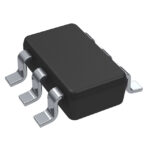 INA181A1QDBVRQ1

The activity of extra discounts on wholesale prices is in full swing…
Please fill in your contact information and we will send you the latest wholesale price list.