ChipApex | Global Electronic Components Supplier

SEARCH
Search Product
Search Post
— IC芯片 | 连接器 | 传感器 | 被动器件 —
Search productSearch post
— IC芯片 | 连接器 | 传感器 | 被动器件 —
Consult the customer manager about the wholesale price.
consultation hotline:86-132-6715-2157
email:[email protected]
Contact the product manager for consultation. One-stop consultation is available.
Do you want a lower wholesale price? Please send us your inquiry and we will reply immediately.
The INA185A2QDCKRQ1 is a bidirectional current-sense amplifier from Texas Instruments, designed for automotive applications with AEC-Q100 qualification. It operates on a single supply voltage ranging from 2.7V to 5.5V and supports common-mode voltages from -0.2V to 26V. The device features a fixed gain of 50 V/V, a bandwidth of 210 kHz, and a maximum quiescent current of 260µA. It offers high precision with an offset voltage of ±55µV at 12V common-mode voltage and a gain error of ±0.2%. Packaged in a compact SC-70-6 footprint, it includes rail-to-rail output swing capabilities.
Verify the specific suffix 'A2' confirms the 50 V/V gain option when ordering. Ensure the 'Q1' designation matches automotive reliability requirements. Confirm the 'DCKR' package code corresponds to the SC-70-6 reel format. Cross-reference the manufacturer part number against official TI documentation to validate authenticity and revision status before integration into production designs.
Select this component for space-constrained automotive systems requiring precise bidirectional current monitoring. The 50 V/V gain suits applications needing moderate amplification without excessive output saturation. Consider the 210 kHz bandwidth for motor control or fault detection speeds. Evaluate the 260µA quiescent current against system power budgets. Verify that the SC-70-6 package fits the available PCB real estate constraints.
This device belongs to the INA185-Q1 family of high-precision, bidirectional current-sense amplifiers. It shares the same core architecture and packaging as other gain variants within the series, differing primarily in internal resistor networks that set the fixed gain options. The family is optimized for cost-sensitive, space-limited automotive environments while maintaining functional safety capabilities.
Other gain variants within the INA185-Q1 family, such as INA185A1QDCKRQ1 (20 V/V), INA185A3QDCKRQ1 (100 V/V), or INA185A4QDCKRQ1 (200 V/V), share identical pinouts and electrical characteristics except for gain. Substitution requires verifying that the alternative gain factor meets the system's signal conditioning requirements.
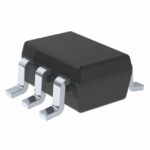 INA185A2QDCKRQ1

The activity of extra discounts on wholesale prices is in full swing…
Please fill in your contact information and we will send you the latest wholesale price list.