 ChipApex | Global Electronic Components Supplier
SEARCH
Search Product
Search Post
— IC芯片 | 连接器 | 传感器 | 被动器件 —
Search productSearch post
— IC芯片 | 连接器 | 传感器 | 被动器件 —
Consult the customer manager about the wholesale price.
consultation hotline:86-132-6715-2157
email:[email protected]
Contact the product manager for consultation. One-stop consultation is available.
Do you want a lower wholesale price? Please send us your inquiry and we will reply immediately.
The INA211CIDCKR is a bidirectional, zero-drift current-shunt monitor manufactured by Texas Instruments. It features a voltage output architecture suitable for both high-side and low-side measurements. The device operates on a single supply voltage ranging from +2.7V to +26V and consumes a maximum of 100µA of supply current. It is designed to sense voltage drops across shunt resistors within a common-mode voltage range of -0.3V to 26V. The component utilizes a zero-drift chopper-stabilized architecture to minimize offset voltage errors, ensuring accurate current sensing even at low full-scale voltages down to 10mV. It is housed in an SC-70-6 package and rated for operation over an extended temperature range.
Verify the specific suffix 'C' indicates the commercial temperature grade variant when sourcing. Confirm the 'DCKR' suffix corresponds to the SC-70-6 package and tape-and-reel quantity. Ensure compatibility with the target application's voltage levels and current requirements against the official datasheet specifications before finalizing procurement orders.
Select this component when bidirectional current measurement is required alongside high accuracy in space-constrained designs. The zero-drift technology makes it suitable for applications where small signal integrity is critical. Compare gain options and package availability against other members of the INA21x family to ensure the best fit for board layout and performance needs.
This part belongs to the INA21x series of current-shunt monitors from Texas Instruments. The series offers multiple fixed gain options and package types to accommodate diverse design requirements. The INA211CIDCKR specifically represents the commercial temperature grade version in the SC-70-6 package, providing a compact solution for modern electronic systems.
Check for pin-compatible alternatives within the INA21x family such as INA210 or INA212 if different gain characteristics are needed. Verify that any substitute maintains the same bidirectional functionality and zero-drift performance metrics required by the original design.
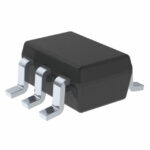 INA211CIDCKR
The activity of extra discounts on wholesale prices is in full swing…
Please fill in your contact information and we will send you the latest wholesale price list.






