 ChipApex | Global Electronic Components Supplier
SEARCH
Search Product
Search Post
— IC芯片 | 连接器 | 传感器 | 被动器件 —
Search productSearch post
— IC芯片 | 连接器 | 传感器 | 被动器件 —
Consult the customer manager about the wholesale price.
consultation hotline:86-132-6715-2157
email:[email protected]
Contact the product manager for consultation. One-stop consultation is available.
Do you want a lower wholesale price? Please send us your inquiry and we will reply immediately.
The INA213AIRSWR is a zero-drift current shunt monitor manufactured by Texas Instruments, belonging to the INA210 series. It features a fixed gain of 50 V/V and operates within a supply voltage range of 2.7 V to 26 V. Key electrical parameters include a maximum input offset voltage of 5 µV, an input bias current of 60 nA, and a common-mode rejection ratio of 140 dB. The device supports bidirectional current sensing with a common-mode voltage range extending from -0.2 V to 40 V. It functions reliably across an industrial temperature range of -40°C to +125°C and consumes a typical operating supply current of 80 µA.
Verify the specific suffix 'R' indicates reel packaging when ordering. Confirm the 'AI' designation corresponds to the automotive-grade or extended industrial temperature range variant as per the official datasheet. Ensure compatibility with the UQFN-10 package footprint during PCB layout. Cross-reference the manufacturer part number against the latest TI documentation to confirm availability status and any potential obsolescence notices.
Select this component when a fixed gain of 50 V/V is required for current sensing applications. The zero-drift technology makes it suitable for high-precision measurements where offset voltage drift is critical. Consider the wide common-mode voltage range if operating in high-side configurations with voltages up to 40 V. Evaluate the low supply current requirement against system power budget constraints.
This device is part of the INA210 family of current shunt monitors, which includes variants with different fixed gains such as 20 V/V (INA210), 50 V/V (INA213), 100 V/V (INA212), and 200 V/V (INA214). All members share the same UQFN-10 package and core zero-drift amplifier architecture, differing primarily in their internal gain settings and corresponding output voltage scaling.
Compatible substitutes within the same family include INA210AIRSWR, INA212AIRSWR, and INA214AIRSWR, provided the gain difference is acceptable for the application design.
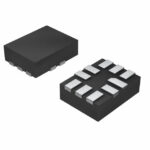 INA213AIRSWR
The activity of extra discounts on wholesale prices is in full swing…
Please fill in your contact information and we will send you the latest wholesale price list.






