 ChipApex | Global Electronic Components Supplier
SEARCH
Search Product
Search Post
— IC芯片 | 连接器 | 传感器 | 被动器件 —
Search productSearch post
— IC芯片 | 连接器 | 传感器 | 被动器件 —
Consult the customer manager about the wholesale price.
consultation hotline:86-132-6715-2157
email:[email protected]
Contact the product manager for consultation. One-stop consultation is available.
Do you want a lower wholesale price? Please send us your inquiry and we will reply immediately.
The INA2141U is a dual low-power instrumentation amplifier manufactured by Texas Instruments, originally part of the Burr-Brown portfolio. It features a 200 kHz bandwidth and a slew rate of 4 V/us. Key electrical parameters include a common-mode rejection ratio (CMRR) of 117 dB, input bias current of 5 nA, and input offset voltage of 50 uV. The device operates on a supply voltage range of 4.5 V to 36 V with a quiescent current of 750 uA. It offers fixed gains of 10 V/V or 100 V/V and has an input voltage noise density of 8 nV/sqrt Hz. The component is housed in a 16-SOIC package and functions within a temperature range of -40 C to +85 C.
Verify the manufacturer designation as Texas Instruments, which acquired the Burr-Brown line, when sourcing this component. Confirm the specific gain configuration (G=10 or G=100) required for the application, as variants exist. Ensure the SOIC-16 package type matches the PCB footprint. Check for moisture sensitivity level requirements during storage and handling procedures to prevent damage before soldering.
Select the INA2141U when a dual instrumentation amplifier with low power consumption and high accuracy is required. Consider its 200 kHz bandwidth and 117 dB CMRR for applications demanding precise differential measurements in noisy environments. Evaluate the 4.5 V to 36 V supply range compatibility with existing system power rails. Compare input offset voltage and bias current specifications against other dual amplifier options to ensure signal integrity meets design thresholds.
The INA2141U belongs to the INA2141 series of instrumentation amplifiers. This series is characterized by low power operation and high precision, making it suitable for various analog signal conditioning tasks. The component represents the transition of Burr-Brown technology into the Texas Instruments product portfolio, maintaining established performance standards for industrial and scientific applications.
The INA2141UE4 is a verified equivalent variant within the same family, offering identical functional specifications and pinout compatibility. Verify that any substitute maintains the dual-channel configuration and SOIC-16 packaging to ensure direct replacement without circuit redesign.
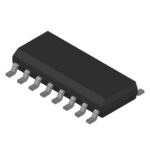 INA2141U
The activity of extra discounts on wholesale prices is in full swing…
Please fill in your contact information and we will send you the latest wholesale price list.






