 ChipApex | Global Electronic Components Supplier
SEARCH
Search Product
Search Post
— IC芯片 | 连接器 | 传感器 | 被动器件 —
Search productSearch post
— IC芯片 | 连接器 | 传感器 | 被动器件 —
Consult the customer manager about the wholesale price.
consultation hotline:86-132-6715-2157
email:[email protected]
Contact the product manager for consultation. One-stop consultation is available.
Do you want a lower wholesale price? Please send us your inquiry and we will reply immediately.
The INA214AIDCKTG4 is a single-channel, bidirectional current shunt monitor from Texas Instruments. It features a zero-drift architecture with an input offset voltage of 1 µV and an input bias current of 28 µA. The device operates on a single supply voltage ranging from 2.7 V to 26 V, consuming a maximum of 100 µA. It provides a fixed gain of 100 V/V and supports high-side or low-side measurements with a common-mode voltage range of -0.3 V to 26 V. Key electrical specifications include a gain-bandwidth product of 30 kHz, a common-mode rejection ratio of 140 dB, and a gain error of 0.02%. It functions within a temperature range of -40°C to +125°C and is housed in a SC-70-6 package.
Verify the specific suffix 'G4' indicates lead-free and RoHS compliance status as per manufacturer documentation. Confirm the package type matches the SC-70-6 footprint requirements for your PCB layout. Ensure the operating temperature range meets your application's environmental conditions. Cross-reference the datasheet revision to confirm pinout and electrical characteristics remain unchanged.
Select this component when high precision is required for low-voltage drop sensing applications. The zero-drift technology minimizes calibration needs compared to standard amplifiers. Consider the 100 V/V fixed gain for applications where signal conditioning without external resistors is preferred. Evaluate the 100 µA supply current against power budget constraints in battery-operated devices.
This part belongs to the INA21x series of voltage-output, bidirectional, zero-drift current shunt monitors. The series offers various gain options and packages to suit different sensitivity and space requirements. The INA214 variant specifically provides a higher gain of 100 V/V, making it suitable for detecting smaller current variations compared to lower-gain counterparts like the INA210 or INA211.
Direct replacements within the same family include INA214BIDCKT or INA214AIRSWT, provided the package and gain specifications align. Verify that substitute parts maintain the same zero-drift performance and common-mode voltage range. Check for any differences in input bias current or offset voltage if precision is critical.
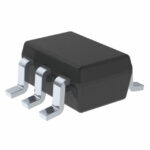 INA214AIDCKTG4
The activity of extra discounts on wholesale prices is in full swing…
Please fill in your contact information and we will send you the latest wholesale price list.





