 ChipApex | Global Electronic Components Supplier
SEARCH
Search Product
Search Post
— IC芯片 | 连接器 | 传感器 | 被动器件 —
Search productSearch post
— IC芯片 | 连接器 | 传感器 | 被动器件 —
Consult the customer manager about the wholesale price.
consultation hotline:86-132-6715-2157
email:[email protected]
Contact the product manager for consultation. One-stop consultation is available.
Do you want a lower wholesale price? Please send us your inquiry and we will reply immediately.
The INA2322EA/250G4 is a dual-channel, micropower, single-supply CMOS instrumentation amplifier manufactured by Texas Instruments. It operates within a supply voltage range of +2.7V to +5.5V and supports an extended temperature range from -55°C to +125°C. The device features a quiescent current of 40µA per channel and less than 1µA in shutdown mode. Key electrical specifications include a 500kHz bandwidth at G=5, a common-mode rejection ratio (CMRR) of 60dB, and an input bias current of 10pA. Gain is set via external resistors with a minimum internal gain of 5V/V.
Verify the specific suffix 'G4' against the manufacturer's latest documentation to confirm compliance status and material composition details. Ensure the TSSOP-14 package variant matches the required footprint for PCB layout. Confirm that the '/250' designation aligns with the intended tape and reel quantity requirements for the manufacturing process.
Select this component when dual-channel precision amplification is required alongside strict power consumption limits. The device is suitable for applications needing high input impedance and low bias current. Consider the external gain setting requirement if precise gain values other than the base 5V/V are necessary. Evaluate the rail-to-rail output performance relative to the specific load conditions expected in the design.
This part belongs to the INA322 family of micropower instrumentation amplifiers. It serves as the dual-channel counterpart to the single-channel INA322EA. Both variants share identical core electrical characteristics, including bandwidth, noise profiles, and shutdown functionality. The family is designed to replace discrete solutions while offering improved reliability and reduced board space.
INA322EA/250G4
The gain is set using external resistors connected between pins 1, 5, and 6. The formula is G = 5 + 5(R2/R1), allowing for gains greater than 5V/V.
The input bias current is typically 10pA, making the device suitable for high-impedance source applications.
The output swings rail-to-rail only when the gain is 10 or greater. At lower gains, such as the default 5V/V, it does not reach the positive rail.
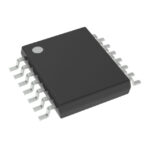 INA2322EA/250G4
The activity of extra discounts on wholesale prices is in full swing…
Please fill in your contact information and we will send you the latest wholesale price list.






