ChipApex | Global Electronic Components Supplier
SEARCH
Search Product
Search Post
— IC芯片 | 连接器 | 传感器 | 被动器件 —
Search productSearch post
— IC芯片 | 连接器 | 传感器 | 被动器件 —
Consult the customer manager about the wholesale price.
consultation hotline:86-132-6715-2157
email:[email protected]
Contact the product manager for consultation. One-stop consultation is available.
Do you want a lower wholesale price? Please send us your inquiry and we will reply immediately.
The INA240A1PW is a zero-drift current sense amplifier manufactured by Texas Instruments, housed in an 8-pin TSSOP package. It features a fixed gain of 20 V/V and operates with a supply voltage range of 2.7 V to 5.5 V. The device supports bidirectional current sensing within a common-mode voltage range of -4 V to 80 V. Key electrical specifications include a maximum input offset voltage of 5 µV, a maximum input bias current of 90 µA, and a typical power supply current of 1.8 mA. It provides a 3-dB bandwidth of 400 kHz and maintains high accuracy with a gain error of 0.05%.
Verify the specific suffix 'PW' confirms the non-winding tape and reel TSSOP-8 package variant rather than the 'PWR' reel version. Confirm RoHS compliance status and moisture sensitivity level requirements against your assembly line specifications. Ensure the ordering part number matches the exact gain code A1 for 20 V/V amplification to avoid functional mismatches in existing designs.
Select this component when designing circuits that demand ultra-precise current measurement in noisy environments with high common-mode voltages. The 20 V/V gain is suitable for applications where the shunt voltage drop is relatively larger compared to higher gain variants. Consider the 8-TSSOP footprint constraints and the extended industrial temperature range suitability for your specific enclosure and thermal management strategy.
This device belongs to the INA240 family of high/low-side, bidirectional, zero-drift current sense amplifiers. The family offers multiple fixed gain options (20 V/V, 50 V/V, 100 V/V, and 200 V/V) to accommodate different shunt resistor values and signal levels. All variants share the same enhanced PWM suppression technology and wide common-mode voltage capabilities, differing primarily in their internal gain settings and output scaling factors.
Direct substitutes within the same family include INA240A2PW (50 V/V), INA240A3PW (100 V/V), and INA240A4PW (200 V/V). These parts share identical pinouts, packages, and core features but differ in gain. Verify that the system's dynamic range and ADC input limits can accommodate the different output voltage scaling provided by these alternative gain codes.
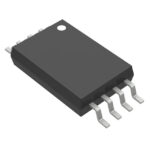 INA240A1PW
The activity of extra discounts on wholesale prices is in full swing…
Please fill in your contact information and we will send you the latest wholesale price list.