 ChipApex | Global Electronic Components Supplier
SEARCH
Search Product
Search Post
— IC芯片 | 连接器 | 传感器 | 被动器件 —
Search productSearch post
— IC芯片 | 连接器 | 传感器 | 被动器件 —
Consult the customer manager about the wholesale price.
consultation hotline:86-132-6715-2157
email:[email protected]
Contact the product manager for consultation. One-stop consultation is available.
Do you want a lower wholesale price? Please send us your inquiry and we will reply immediately.
The INA281B3IDBVR is a high-precision current-sense amplifier manufactured by Texas Instruments. It operates with a supply voltage range of 2.7 V to 20 V and supports common-mode voltages from -4 V to 110 V. The device features a fixed gain of 50 V/V, a gain bandwidth product of 1.3 MHz, and a slew rate of 2.5 V/µs. Key electrical specifications include an input offset voltage of 100 µV, an input bias current of 20 µA, and a common-mode rejection ratio of 120 dB. It is housed in a SOT-23-5 package and functions within a temperature range of -40°C to +125°C.
Verify the specific suffix 'B3' against the official datasheet to confirm the fixed gain value, as standard variants may differ. Ensure the operating environment remains within the specified -40°C to +125°C temperature range. Confirm that the system's common-mode voltage does not exceed the 110 V maximum limit. Check for RoHS compliance status if required by regional regulations. Validate the SOT-23-5 thermal performance for the intended power dissipation levels.
Select this component when a fixed gain of 50 V/V is required for signal conditioning. Consider the 1.3 MHz bandwidth for applications requiring rapid current change detection. Evaluate the SOT-23-5 package size constraints against available PCB space. Compare the 100 µV offset voltage against system accuracy requirements. Assess the 20 µA input bias current impact on measurement precision at low current levels.
This device belongs to the INA281 family of current-sense amplifiers designed for high-voltage and high-side sensing applications. The family offers various gain options and packaging styles to suit different design needs. The INA281 series is characterized by its ability to operate with large negative common-mode voltages, making it suitable for industrial and automotive environments where robustness is critical.
The INA281B3IDBVR has a fixed voltage gain of 50 V/V.
Yes, the INA281B3IDBVR supports a common-mode voltage range from -4 V to 110 V, allowing for bidirectional current sensing.
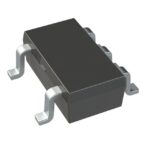 INA281B3IDBVR
The activity of extra discounts on wholesale prices is in full swing…
Please fill in your contact information and we will send you the latest wholesale price list.






