 ChipApex | Global Electronic Components Supplier
SEARCH
Search Product
Search Post
— IC芯片 | 连接器 | 传感器 | 被动器件 —
Search productSearch post
— IC芯片 | 连接器 | 传感器 | 被动器件 —
Consult the customer manager about the wholesale price.
consultation hotline:86-132-6715-2157
email:[email protected]
Contact the product manager for consultation. One-stop consultation is available.
Do you want a lower wholesale price? Please send us your inquiry and we will reply immediately.
The IQS127D-00000-TSR is a single-channel capacitive proximity and touch controller from the Azoteq ProxSense series. It features an integrated voltage regulator and internal reference capacitor, requiring minimal external components. The device provides dedicated outputs for proximity (POUT) and touch (TOUT) events, with configurable logic levels and output modes via One-Time Programmable (OTP) settings. It operates within a supply voltage range of 2.95V to 5.5V and supports four user-selectable power modes, including Boost Mode (9ms sample rate), Normal Power Mode (50ms), Low Power Mode 1 (100ms), and Low Power Mode 2 (200ms). The IC employs Automatic Tuning Implementation (ATI) and advanced digital signal processing for noise immunity.
Verify the specific ordering suffix -TSR corresponds to the required tape-and-reel packaging configuration. Confirm that the default OTP configuration meets application requirements, as in-circuit programming may be limited by external component values. Ensure the design adheres to the specified operating temperature range of -40°C to +85°C.
Select this component for applications requiring a single-channel capacitive solution with integrated proximity and touch detection. Consider the available power modes if battery life is a critical constraint, noting that lower power modes increase response time. Ensure the sense antenna design allows for proper ATI calibration within the maximum capacitance range.
The IQS127D belongs to the Azoteq IQ Switch ProxSense series of capacitive sensors. It is designed as a drop-in replacement for electromechanical switches in various human interface devices. The device integrates analog sensing circuitry with digital signal processing to detect changes in capacitance relative to ground.
Direct replacements include other IQS127 variants such as IQS127D-00002-TSR or IQS127D-00008-TSR, which offer different pre-configured OTP settings. Verify that the alternative part number matches the required output logic and threshold sensitivities for the specific application.
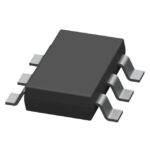 IQS127D-00000-TSR
The activity of extra discounts on wholesale prices is in full swing…
Please fill in your contact information and we will send you the latest wholesale price list.





