 ChipApex | Global Electronic Components Supplier
SEARCH
Search Product
Search Post
— IC芯片 | 连接器 | 传感器 | 被动器件 —
Search productSearch post
— IC芯片 | 连接器 | 传感器 | 被动器件 —
Consult the customer manager about the wholesale price.
consultation hotline:86-132-6715-2157
email:[email protected]
Contact the product manager for consultation. One-stop consultation is available.
Do you want a lower wholesale price? Please send us your inquiry and we will reply immediately.
The IQS127D-00200-TSR is a single-channel capacitive proximity and touch controller from the Azoteq ProxSense series. It operates within a supply voltage range of 2.95V to 5.5V and functions across a temperature range of -40°C to +85°C. The device features an internal voltage regulator and reference capacitor, utilizing Automatic Tuning Implementation (ATI) for optimal performance. It provides dedicated outputs for proximity events on POUT and touch events on TOUT, which can be configured via One-Time Programmable (OTP) options into four power modes with minimum current consumption of 15µA.
Verify the specific ordering suffix against the manufacturer's official documentation to confirm factory-programmed OTP settings. The suffix indicates pre-configured parameters such as power mode and output logic. Ensure the package type matches the design requirements, as the IQS127D is available in TSOT23-6. Confirm RoHS compliance status through the latest datasheet revision before finalizing procurement specifications.
Select this component for applications requiring a single-channel capacitive solution with integrated proximity and touch detection. The IQS127D supports multiple power modes to balance response time and current consumption. Consider the I2C interface availability if data streaming is required, though this variant focuses on direct output control. Evaluate the sense antenna capacitance range to ensure compatibility with the automatic ATI algorithm for stable operation across environmental variations.
The IQS127D belongs to the Azoteq IQ Switch® ProxSense® series, designed for low-power capacitive sensing. This series emphasizes minimal external components and robust noise immunity. The device replaces electromechanical switches in various consumer and industrial applications. It integrates advanced signal processing to handle environmental drifts and RF interference effectively.
Direct replacements must match the single-channel architecture and TSOT23-6 package. Verify that alternative controllers support similar power modes and output configurations. Check for compatible OTP programming capabilities if specific factory settings are required. Ensure the replacement device offers comparable noise immunity and automatic tuning features for seamless integration.
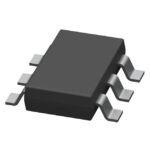 IQS127D-00200-TSR
The activity of extra discounts on wholesale prices is in full swing…
Please fill in your contact information and we will send you the latest wholesale price list.






