 ChipApex | Global Electronic Components Supplier
SEARCH
Search Product
Search Post
— IC芯片 | 连接器 | 传感器 | 被动器件 —
Search productSearch post
— IC芯片 | 连接器 | 传感器 | 被动器件 —
Consult the customer manager about the wholesale price.
consultation hotline:86-132-6715-2157
email:[email protected]
Contact the product manager for consultation. One-stop consultation is available.
Do you want a lower wholesale price? Please send us your inquiry and we will reply immediately.
The IQS333-0-QFR is a capacitive touch and proximity controller from Azoteq's ProxSense series, housed in a QFN-32 package. It supports 9 projected or 7 self-capacitive channels with two configurable 11-bit sliders or scroll wheels. Operating on a 1.8V to 3.6V supply, it features an internal regulator and reference capacitor. The device includes automatic tuning implementation (ATI), drift compensation, and an I2C interface. It offers low power consumption of less than 3µA in active sensing LP mode and provides eight PWM LED drivers.
Verify the specific ordering suffix against the manufacturer's current datasheet revision to ensure correct temperature range and packaging specifications. Confirm that the QFN-32 footprint matches your PCB design guidelines. Check for any recent errata documents that may impact initialization sequences or register defaults for this component variant.
Select this component when high sensitivity and long proximity detection ranges are required. Ensure the application environment allows for the necessary overlay material properties, as the sensor can detect through wood or porous plastics. Verify that the host microcontroller supports the I2C protocol and has sufficient memory to manage the configuration registers for ATI and threshold settings.
This part belongs to the IQ Switch ProxSense family, designed for cost-effective capacitive sensing solutions. It integrates analog front-end circuitry with digital signal processing to minimize external components. The internal voltage regulator and reference capacitor reduce system bill of materials compared to discrete solutions.
Direct replacements within the same family include other IQS333 variants with different suffixes for package or temperature adjustments. Cross-family migration to IQS320 or IQS7222 series requires significant firmware and hardware redesign due to differing channel counts and interface capabilities.
No, the device operates in either self-capacitive or projected capacitive mode based on the configuration bit in Register 0x01. It cannot run both modes concurrently.
The IQS333 supports up to 11-bit resolution for its two configurable slider or scroll wheel outputs. This resolution is global and applies to both wheels.
ATI automatically adjusts multipliers and compensation values to maintain optimal sensitivity despite environmental changes like temperature or humidity. Users can select between Full, Partial, or Alternative ATI methods via register configuration.
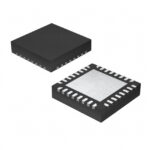 IQS333-0-QFR
The activity of extra discounts on wholesale prices is in full swing…
Please fill in your contact information and we will send you the latest wholesale price list.





