 ChipApex | Global Electronic Components Supplier
SEARCH
Search Product
Search Post
— IC芯片 | 连接器 | 传感器 | 被动器件 —
Search productSearch post
— IC芯片 | 连接器 | 传感器 | 被动器件 —
Consult the customer manager about the wholesale price.
consultation hotline:86-132-6715-2157
email:[email protected]
Contact the product manager for consultation. One-stop consultation is available.
Do you want a lower wholesale price? Please send us your inquiry and we will reply immediately.
The IRS2541STRPBF is an obsolete DC-DC controller IC designed for step-down (buck) switching power supply applications, specifically optimized for LED drivers. It supports PWM dimming and operates with a fixed switching frequency of 500kHz. The device functions as a single-output controller without internal switches, requiring external MOSFETs. It is housed in an 8-SOIC package with a width of 3.90mm. The component supports a supply voltage range from 8V to 16.6V and operates within a junction temperature range of -25°C to 125°C.
This specific part number is officially discontinued and no longer manufactured by Infineon Technologies. Verification of availability should focus on the designated replacement model, IRS25411STRPBF, which serves as the direct successor. Ensure that any sourced units are confirmed as genuine replacements rather than obsolete stock of the original part. Cross-reference datasheets to confirm pin compatibility before integration into new designs.
Select the IRS25411STRPBF as the primary alternative due to its identical functional role and pinout compatibility. The replacement maintains the same buck topology and 500kHz switching frequency. Verify that the updated supply voltage specifications align with the target application requirements. This transition ensures continued support and availability while preserving the original circuit architecture's performance characteristics.
The IRS2541 series represents Infineon's portfolio of integrated gate drivers and controllers for high-voltage applications. The IRS2541STRPBF belongs to this family, focusing on efficient power management for lighting and general DC-DC conversion. As an obsolete component, it has been superseded by newer iterations like the IRS25411, reflecting ongoing improvements in manufacturing and feature sets within the company's product line.
The IRS25411STRPBF is the confirmed public substitute for the IRS2541STRPBF. Both components share the same 8-SOIC package and core buck controller functionality. Engineers should verify electrical parameter tolerances between the two versions to ensure seamless integration without circuit modification.
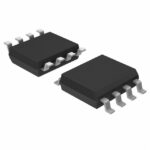 IRS2541STRPBF
The activity of extra discounts on wholesale prices is in full swing…
Please fill in your contact information and we will send you the latest wholesale price list.





