 ChipApex | Global Electronic Components Supplier
SEARCH
Search Product
Search Post
— IC芯片 | 连接器 | 传感器 | 被动器件 —
Search productSearch post
— IC芯片 | 连接器 | 传感器 | 被动器件 —
Consult the customer manager about the wholesale price.
consultation hotline:86-132-6715-2157
email:[email protected]
Contact the product manager for consultation. One-stop consultation is available.
Do you want a lower wholesale price? Please send us your inquiry and we will reply immediately.
The ISL54004IRTZ-T is an integrated audio amplifier system manufactured by Renesas Electronics Corporation, housed in a 20-lead 4x4 TQFN package. It combines a mono bridge-tied load (BTL) amplifier and stereo single-ended headphone amplifiers. Operating from a single +2.7V to +5.5V supply, it delivers up to 1.23W into an 8Ω BTL speaker and 215mW into 16Ω headphones at 1% THD+N. The device features four-level programmable gain, automatic headphone detection switching, low power shutdown, thermal overload protection, and click/pop suppression.
Verify component authenticity through authorized channels due to discontinued status. Confirm RoHS compliance and MSL classification before assembly. Review datasheet specifications for absolute maximum ratings and thermal resistance values to ensure proper PCB layout and heat dissipation design.
Select this component for designs requiring a single-chip solution for both speaker and headphone outputs. Ensure the application operates within the specified voltage range and utilizes the 20-lead TQFN package constraints. Consider the programmable gain settings and headphone detection logic requirements for system integration.
This part belongs to the ISL54004 series of integrated audio amplifier systems. It is designed for portable electronics where space and power efficiency are critical. The device consolidates multiple amplifier functions into one package, reducing the need for external components and simplifying board layout for mobile applications.
No recommended replacement parts are available according to official documentation. Contact technical support for potential alternatives or updated product information.
The device uses a headphone sense input circuit that detects when a headphone jack is inserted. Upon detection, it automatically switches the audio inputs from the mono BTL driver to the headphone drivers. A logic control pin can also be used to override this function.
The click and pop suppression circuitry prevents audible clicks and pops at the speakers when the device transitions in and out of the shutdown state. It maintains bias voltage connections during these transitions to minimize transients.
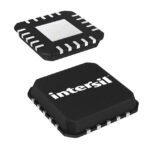 ISL54004IRTZ-T
The activity of extra discounts on wholesale prices is in full swing…
Please fill in your contact information and we will send you the latest wholesale price list.






