ChipApex | Global Electronic Components Supplier

SEARCH
Search Product
Search Post
— IC芯片 | 连接器 | 传感器 | 被动器件 —
Search productSearch post
— IC芯片 | 连接器 | 传感器 | 被动器件 —
Consult the customer manager about the wholesale price.
consultation hotline:86-132-6715-2157
email:[email protected]
Contact the product manager for consultation. One-stop consultation is available.
Do you want a lower wholesale price? Please send us your inquiry and we will reply immediately.
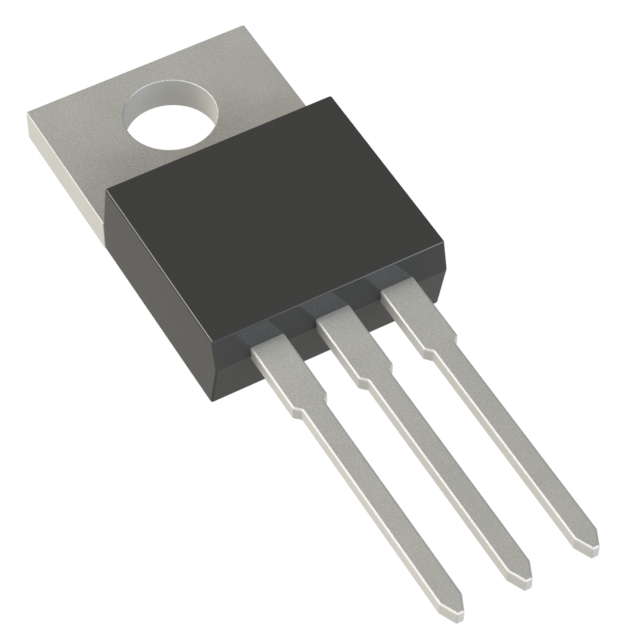
The ISL9V5036P3-F085C is an N-channel IGBT from the ECOSPARK series, packaged in a TO-220-3LD (CASE 340AT) housing. It features a collector-emitter breakdown voltage of 390 V and supports a continuous collector current of 46 A at a case temperature of 25°C. The device includes internal diodes for voltage clamping, eliminating the need for external components. It demonstrates a self-clamped inductive switching energy capability of 500 mJ at 25°C junction temperature. The component operates within a junction temperature range of -40°C to 175°C and has a thermal resistance junction-to-case of 0.6 °C/W.
Verify the specific ordering suffix against the manufacturer's official documentation to confirm package type and availability status. The datasheet indicates that certain variants within this family may be discontinued or not recommended for new designs. Confirm compliance with RoHS directives and lead-free specifications prior to integration into production schedules.
Select this component for automotive ignition systems requiring high surge current handling and robust short-circuit withstand capability. Ensure the application design accounts for the 390 V breakdown rating and the 46 A continuous current limit at specified case temperatures. Validate thermal management strategies given the 0.6 °C/W junction-to-case resistance to maintain operation within the 175°C maximum junction temperature.
This device belongs to the onsemi ECOSPARK family of ignition IGBTs, designed specifically for automotive coil drivers. It shares core electrical characteristics with the ISL9V5036S3ST and ISL9V5036S3ST-F085C models, differing primarily in the physical package configuration. The TO-220 variant provides a robust mechanical solution for applications where surface-mount options are unsuitable.
The ISL9V5036S3ST and ISL9V5036S3ST-F085C serve as functional equivalents within the same family but utilize the D2PAK-3 (TO-263) surface-mount package instead of the TO-220 through-hole format. Verify footprint compatibility and thermal dissipation requirements when substituting between these package types.
 ISL9V5036P3-F085C

The activity of extra discounts on wholesale prices is in full swing…
Please fill in your contact information and we will send you the latest wholesale price list.