ChipApex | Global Electronic Components Supplier

SEARCH
Search Product
Search Post
— IC芯片 | 连接器 | 传感器 | 被动器件 —
Search productSearch post
— IC芯片 | 连接器 | 传感器 | 被动器件 —
Consult the customer manager about the wholesale price.
consultation hotline:86-132-6715-2157
email:[email protected]
Contact the product manager for consultation. One-stop consultation is available.
Do you want a lower wholesale price? Please send us your inquiry and we will reply immediately.
The ISO121G is a precision, low-cost isolation amplifier manufactured by Texas Instruments. It features galvanic isolation with an insulation voltage of 3500 Vrms and a 60 kHz bandwidth. The device offers a common-mode rejection ratio of 115 dB and an input offset voltage of 10 mV. It operates on a single supply ranging from 4.5 V to 18 V with a typical current consumption of 5 mA. The gain error is specified at 0.01%. Designed for through-hole mounting, it is housed in a DIP-40 package and supports an operating temperature range from -55°C to +125°C.
Verify the specific package type and pinout configuration against your PCB layout requirements before ordering. Confirm that the thermal management strategy accommodates the power dissipation characteristics within the intended operating temperature range. Ensure that the supply voltage limits are strictly observed to prevent device damage. Check for any specific handling precautions related to the through-hole mounting process.
Select this component when high precision and cost-effective isolation are required for analog signals. Consider the 60 kHz bandwidth limit for signal frequency requirements. Evaluate the DIP-40 package size constraints against available board space. Compare the 3500 Vrms isolation rating against system safety standards to ensure adequate protection margins.
The ISO121G belongs to the ISO121 family of isolation amplifiers from Texas Instruments. This series is designed to provide reliable signal isolation in demanding industrial and medical applications. The family emphasizes precision and low cost, making it suitable for applications where traditional optocouplers or transformer-based isolators may be too slow or expensive.
Consult official datasheets for direct replacements within the ISO121 family or comparable isolation amplifiers from other manufacturers. Verify compatibility regarding pinout, package dimensions, and electrical specifications such as bandwidth and isolation voltage before substituting.
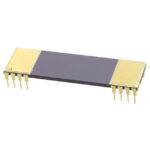 ISO121G

The activity of extra discounts on wholesale prices is in full swing…
Please fill in your contact information and we will send you the latest wholesale price list.