 ChipApex | Global Electronic Components Supplier

SEARCH
Search Product
Search Post
— IC芯片 | 连接器 | 传感器 | 被动器件 —
Search productSearch post
— IC芯片 | 连接器 | 传感器 | 被动器件 —
Consult the customer manager about the wholesale price.
consultation hotline:86-132-6715-2157
email:[email protected]
Contact the product manager for consultation. One-stop consultation is available.
Do you want a lower wholesale price? Please send us your inquiry and we will reply immediately.
The ISPPAC30-01SI is a programmable analog and mixed-signal device from Lattice Semiconductor's ispPAC family, designed for in-system configuration via SPI. It integrates non-volatile e2CMOS technology to store analog circuit configurations without external memory. The device supports precise control of power supply parameters, including voltage monitoring and trimming through integrated DACs. Its architecture allows designers to implement custom analog functions directly on the board, reducing component count and design complexity while maintaining high accuracy across operating conditions.
Verify the specific suffix '01SI' against official Lattice documentation to confirm pinout, temperature range, and package type. Ensure compatibility with existing SPI controller logic and voltage levels. Confirm availability through authorized distributors as lead times may vary. Check for any recent lifecycle notices or obsolescence warnings before finalizing procurement plans.
Select the ISPPAC30-01SI when flexible analog functionality is required without dedicated ASIC development. Compare performance metrics such as DAC resolution and ADC speed against application requirements. Consider the ease of integration with existing digital controllers via SPI. Evaluate thermal performance and package size constraints relative to the target PCB layout.
This component belongs to Lattice's ispPAC series, which specializes in programmable analog solutions. Unlike standard FPGAs focused on digital logic, ispPAC devices integrate analog blocks like comparators, filters, and amplifiers alongside non-volatile memory. This hybrid approach enables rapid prototyping and field-upgradable analog designs within compact footprints.
Direct replacements are limited due to the proprietary nature of ispPAC analog architectures. Review Lattice's updated product portfolio for newer generations with enhanced features. Functional equivalents may require redesigning the analog front-end if pinouts or electrical characteristics differ significantly.
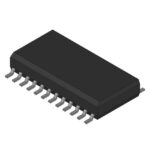 ISPPAC30-01SI

The activity of extra discounts on wholesale prices is in full swing…
Please fill in your contact information and we will send you the latest wholesale price list.





