 ChipApex | Global Electronic Components Supplier

SEARCH
Search Product
Search Post
— IC芯片 | 连接器 | 传感器 | 被动器件 —
Search productSearch post
— IC芯片 | 连接器 | 传感器 | 被动器件 —
Consult the customer manager about the wholesale price.
consultation hotline:86-132-6715-2157
email:[email protected]
Contact the product manager for consultation. One-stop consultation is available.
Do you want a lower wholesale price? Please send us your inquiry and we will reply immediately.
JAN1N5297-1 is listed in the Current Regulation - Diodes, Transistors range at ChipApex. The manufacturer field lists Microchip Technology. Its product description is DIODE CUR REG 100V 1.1MA 500MW. Review the specifications below when checking this part for your BOM.
The JAN1N5297-1 is a silicon current regulator diode manufactured by Microchip Technology, designed for military applications under the MIL-PRF-19500/463 qualification standard. It operates in an axial DO-7 (DO-204AA) through-hole package with hermetic sealing. The device regulates a steady source current of 1 mA with a maximum limiting voltage of 1.35 V. It supports a wide operating temperature range from -55°C to 175°C and handles a maximum power dissipation of 500 mW.
Verify that the supplier provides official documentation confirming compliance with MIL-PRF-19500/463 standards. Ensure the specific grade (JAN, JANTX, etc.) matches the design requirements. Request traceability records and lot test reports to confirm authenticity and quality control measures for defense-grade components.
Select this component when a stable 1 mA current source is required in a through-hole axial package. Compare against commercial equivalents if military qualification is not mandatory. Consider the JANTX1N5297UR-1 variant for surface-mount MELF applications while maintaining similar electrical characteristics.
This part belongs to the popular 1N5283-1 through 1N5314-1 series of 0.5 watt current regulators. These devices offer a selection of currents from 0.22 mA to 4.7 mA in standard 10% tolerances. The series is widely used in military electronics where reliable current regulation in small axial packages is essential.
Publicly confirmed parametric equivalents include JAN1N5297UR-1 for surface mount needs. Other manufacturers such as Aeroflex, MACOM, and Cobham produce compatible versions under the same JEDEC registration numbers.
Explore related parts through Discrete Semiconductor Products, all product categories, ChipApex homepage.
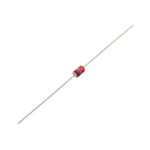 JAN1N5297-1

The activity of extra discounts on wholesale prices is in full swing…
Please fill in your contact information and we will send you the latest wholesale price list.





