ChipApex | Global Electronic Components Supplier

SEARCH
Search Product
Search Post
— IC芯片 | 连接器 | 传感器 | 被动器件 —
Search productSearch post
— IC芯片 | 连接器 | 传感器 | 被动器件 —
Consult the customer manager about the wholesale price.
consultation hotline:86-132-6715-2157
email:[email protected]
Contact the product manager for consultation. One-stop consultation is available.
Do you want a lower wholesale price? Please send us your inquiry and we will reply immediately.
The KA358 is a dual operational amplifier manufactured by Fairchild Semiconductor. It features two independent high-gain amplifiers within a single package, designed for general-purpose applications. The device operates on a supply voltage range of 3V to 32V and draws a typical supply current of 2mA per amplifier. Key electrical specifications include an open-loop gain of 84dB and a unity-gain bandwidth suitable for standard signal processing tasks. It is available in an 8-pin DIP through-hole package.
Verify the manufacturer origin carefully, as Fairchild Semiconductor has undergone corporate restructuring and integration with ON Semiconductor. Ensure the specific orderable part number matches the required temperature grade and package variant. Confirm RoHS compliance status if environmental regulations apply to your assembly process. Cross-reference datasheet revisions to ensure pinout and electrical characteristics remain consistent with your design requirements.
Select this component when a cost-effective dual op-amp solution is required for low-frequency applications. Consider the 2mA quiescent current consumption relative to power-sensitive designs. Verify that the 84dB open-loop gain meets the precision requirements of your specific circuit topology. Ensure the operating voltage range aligns with your system's power supply rails.
The KA358 belongs to the family of dual operational amplifiers widely used in industrial and consumer electronics. Originally produced by Fairchild Semiconductor, these devices are standard components for basic analog functions. The integration of two amplifiers in one package reduces board space compared to using single op-amps. This part represents a legacy component often found in existing schematics requiring reliable, general-purpose amplification.
Check for direct equivalents such as the LM358 series, which shares similar pinouts and electrical characteristics. Verify compatibility regarding supply voltage ranges and output swing capabilities before substitution.
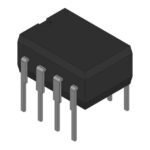 KA358

The activity of extra discounts on wholesale prices is in full swing…
Please fill in your contact information and we will send you the latest wholesale price list.