ChipApex | Global Electronic Components Supplier

SEARCH
Search Product
Search Post
— IC芯片 | 连接器 | 传感器 | 被动器件 —
Search productSearch post
— IC芯片 | 连接器 | 传感器 | 被动器件 —
Consult the customer manager about the wholesale price.
consultation hotline:86-132-6715-2157
email:[email protected]
Contact the product manager for consultation. One-stop consultation is available.
Do you want a lower wholesale price? Please send us your inquiry and we will reply immediately.
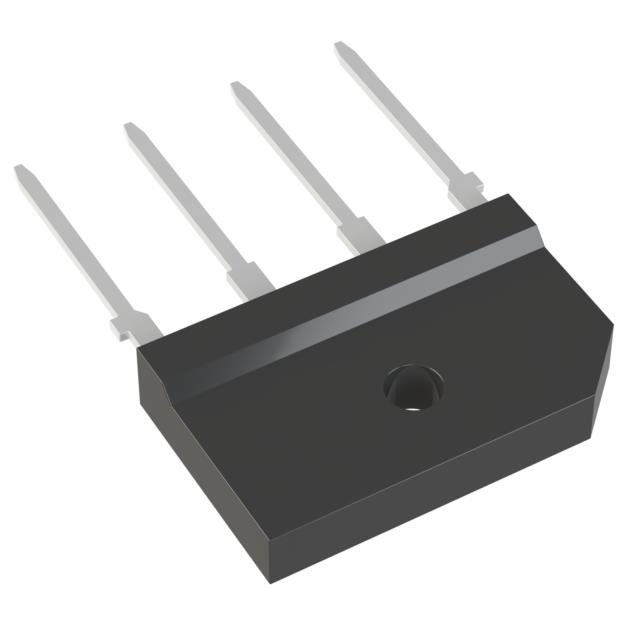
The KBJL1501G-BP is a single-phase bridge rectifier manufactured by Micro Commercial Components (MCC). It utilizes glass passivated junction technology for enhanced reliability. The device features a KBJL package designed for through-hole mounting on printed circuit boards. Key electrical specifications include a maximum average forward rectified current of 15 A and peak reverse voltage ratings ranging from 50 V to 1000 V, with the '1' suffix indicating a 50 V rating. The component supports a wide operating temperature range from -55°C to +150°C.
Verify the specific voltage rating associated with the model suffix against official MCC datasheets before procurement. Confirm package dimensions and pinout compatibility with existing PCB footprints. Check for RoHS compliance status if environmental regulations apply to the final assembly. Ensure storage conditions adhere to manufacturer guidelines to prevent moisture sensitivity issues prior to soldering.
Select this component when a 15 A current rating and high-voltage isolation are required in a space-constrained design. Compare thermal resistance values against alternative packages like GBJ or KBPC if heat dissipation is a primary constraint. Verify that the peak reverse voltage exceeds the maximum circuit voltage with adequate safety margin. Consider the operating temperature range to ensure suitability for extreme environment applications.
The KBJL series represents a subset of MCC's bridge rectifier portfolio, offering a smaller footprint compared to standard KBJ packages while maintaining similar current handling capabilities. This series is part of the broader family of glass passivated bridge rectifiers designed for general-purpose applications. The 'BP' suffix typically denotes bulk packaging without specific tape-and-reel configuration.
Direct replacements may include other 15 A bridge rectifiers in the KBJL package from different manufacturers, provided pinouts and electrical ratings match. Cross-reference with GBJL1501 variants if package size differences are acceptable. Verify that substitute components meet the same glass passivation and temperature rating standards.
 KBJL1501G-BP

The activity of extra discounts on wholesale prices is in full swing…
Please fill in your contact information and we will send you the latest wholesale price list.